 WEAR SALE
 PLASTICS SALE
  cycling cheap


 airbox and airbox covers
 UNIVERSAL FENDER
 NUMBER PLATE
 LOVER FORK COVERS
 INGNITION & CLUTCH COVER
 SWINGARM PROTECTION
 TANK COVER
 Front disc covers
 MUD FLAP
 SKID PLATES
 FRAME PROTECTOR
 HEADLIGHT MASK
 Radiator grilles
 TAIL LIGHT FENDER
 SIDE PANELS
 FRONT FENDER
 RADIATOR SCOOPS
 Chain guide
 REAR FENDER
 BRAKES
 BRAKE DISCS & BOLTS
 BRAKE PADS
 CALIPERS & BRAKE PUMPS
 BRAKE PEDAL
 BRAKE HOSE
 ENGINE PARTS
 GASKETS & SEALS
 CARBURETOR
 BEARINGS
 OIL PLUG
 PISTON SETS
 TIMING CHAINS
 CLUTCH & ACCESSORIES
 Nozzles
 CYLINDER HEAD
 engine covers
 WATER PUMP
 CONNECTING ROD KIT
 FILTERS
 AIR FILTER COVER
 OIL FILTER
 NET AIR FILTER
 AIR FILTER
 FUEL FILTER
 HANDGUARDS
  OPEN
OPEN Open universal
 CLOSED
 CLOSED UNIVERSAL
 HANDGUARD ACCESSORIES
 RADIATOR
 RADIATORS
 RADIATOR BRACES
 RADIATOR HOSES
 WHEELS
 BEARINGS
 SPOKES
 SPACERS
 NUTS
NUTS WHEELS & RIMS
 TPS SENSOR COVER
 SWINGARM & LINKAGE
 LINKAGE KIT
 KETTENBLOCK
 LINKAGE COVERS
 CABLES
 TANKS
TANKS ADDITIONAL TANKS
 TANK CAPS
 TANK VALVES
 TANK PARTS
 LEVERS AND PERCH
 GRIPS
GRIPS THROTTLE TUBE
 GRIP ACCESSORIES
 SHIFT LEVERS
 CHAIN SET
 FRONT SPROCKETS
 SPROCKETS & SCREWS
 CHAINROLLER
 SPROCKET COVERS
  Accessories for chain wheels
 STEERING
 HANDLEBARS
 CLAMPS
 STEERING NECK
 CROSSBAR PAD
 HANDLEBAR ACCESORIES
 SEATS
SEATS SEATFOAM
 SEAT COVER
 FOOTPEGS
 FOOTPEGS
 SPRINGS & PINS
 PROTECTORS
 HEADLIGHTS
 SPARK PLUG
  BOLT SETS
 BRAKE BOLT AND SPROCKET SCREW
 PLASTIC SCREWS
 SEAT
SEAT SHOCK ABSORBERS
 SIMERINGS & DUSTERS
 SET OF BUSHINGS
 bleeder screw
 front shock absorber covers
 rear shock absorber covers
 REAR SHOCK ATTACHMENT
 LAUNCH HELPER
 EXHAUST
 EXHAUST PROTECTION
 COTTON WOOL
 PLUGS
PLUGS HEAT-RESISTANT FOIL
 CONNECTING RUUBBER
 SPRINGS
 REPAIR KITS
 SILENTBLOCK
 Adventure
 rider equipment
 MOTOCROSS/ENDURO
 Acerbis carbon
 Acerbis Airstrike-X
 Acerbis T711
 Acerbis Linear
 Acerbis Whoops
 FULL FACE
 FLIP-UP
 OPEN
OPEN JUNIOR
 RETRO
RETRO ACCESSORIES
 GOGGLES
 GLASS, TEARS OFF...
 PROTECTION
 CHEST PROTECTORS
 NECK BRACES
 KIDNEY BELTS
 ELBOW PROTECTORS
 KNEE GUARDS
 BACKBONE
 JUNIOR
 children’s chest protector
  SOFT PANTS
 BOOTS
BOOTS travel
 ANKLE
ANKLE ENDURO
 JUNIOR
 soles and more
 Wellies
 on a scooter
 JUNIOR
 JACKETS
 ENDURO
 women
women PANTS
PANTS ENDURO
 TEXTILIE
  jeans
jeans summer
 GLOVES
 WINTER
 ENDURO
 summer
 WATERPROOF
 women's
  glove liners
 SOCKS
SOCKS WATERPOOF GEAR
 VESTS
VESTS THERMO UNDERWEAR
 THERMO T-SHIRTS
 THERMO PANTS
 THERMO KNEE SOCKS
 leisurewear
 Headwear
 T-SHIRTS
 trika-uni
 Children's T-shirts
 Mini T-shirts
 SWEATSHIRT
 leisure jackets
 FREE TIME SHORTS
 Sweatpants
 Casual shoes
 HOODS
HOODS SCARF
SCARF TOOLS
TOOLS Wrenches, hooks, screwdrivers
 TIRE LEVERS
  CHAIN BREAKERS
 Preparations for shocks
 Preparations for wheels
 Engine preparations
 Preparations for bearings
 OTHER MOTO TOOLS
 GRAPHICKITS, NUMBERS
 Wheel changers
 Canisters, measuring cups
 TRANSPORT
 CARPETS
 MOTORCYCLE COVERS
 HOURMETER
 helpers for track and training
 STAND
STAND HYDRATION BAGS
 PIT BOARD, MARKER
 MOTO LUGGAGE
 BACKPACKS
 WAIST PACKS
 VOUCHERS
 STAND
STAND FORK OIL
 AIR FILTER OIL
 CHAIN LUBES
 COOLANT FLUID
 BRAKE FLUID
 CLEANER AND IMPREGNATION
 additives
 MEFO MOUSSE
 10"
10" 12"
12" 14"
14" 16"
16" 17"
17" 18"
18" 19"
19" 20"
20" 21"
21" MOUSSE GEL
 TUBE FOR MOTORCYCLE
 4"
4" 5"
5" 6"
6" 8"
8" 9"
9" 10"
10" 12"
12" 13"
13" 14"
14" 15"
15" 16"
16" 17"
17" 18"
18" 19"
19" 21"
21" 22"
22" 23"
23" MX TIRE
 10"
10" 12"
12" 14"
14" 15"
15" 16"
16" 17"
17" 18"
18" 19"
19" 20"
20" 21"
21" ENDURO TIRE
 ROAD TIRE
 15"
15" 23"
23" 4"-6,5"
 8"
8" 13"
13" HALTERS
 Massage products
 Pre-sports preparations
 Post-sports preparations
8 most common mistakes when choosing a motocross helmet: Avoid them!
8 most common mistakes when choosing an MX helmet: Avoid them!Jana Wolfschlägerová
Share the article


6.05.2026
For any rider, buying new gear for the track is a big deal. But it certainly doesn't pay to rush when it comes to head protection. Motocross is a discipline where even a small error in judgment can have a big impact in a crash. Many riders are influenced by attractive graphics or a low price when making a purchase without considering the technical implications of their choice.
In this article, we will focus on eight major mistakes that beginners and experienced riders make - from misjudging the size and ignoring modern safety standards, to inappropriate weight for juniors, to complications with the compatibility of goggles or neck protectors.
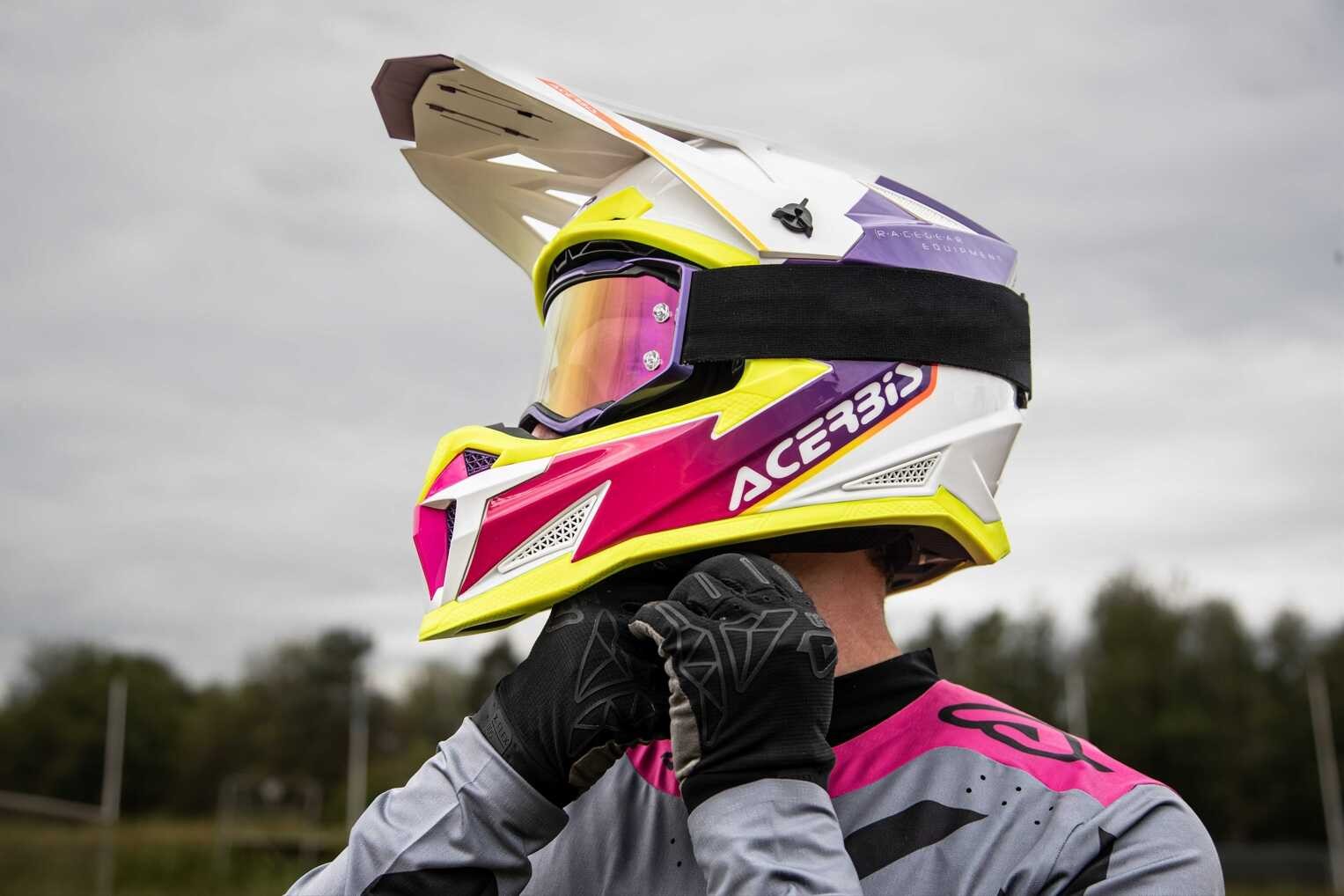
1. Choosing a size based on immediate comfort in the store
This is a very common mistake. When you put on a new MX helmet, it should feel almost tight. The inner padding adapts to the anatomy of your head after a few hours of riding, which actually increases the internal space. If the helmet feels comfortable when you first try it on, after a few weeks of training it will start to move uncontrollably on your head.
How to test the size correctly:
- Stability rule: With the strap fastened, try to move your head sharply to the sides. If the skin on your cheeks does not move with the helmet, reach for a smaller size.
- Pull test: Try to pull the helmet from the back to the front over your chin. If you can take it off with the strap fastened, the size is wrong.
- Cheek pressure: The correct size can be determined by the pressure on the cheekbone, which should be even and pronounced.
2. Underestimating the difference between ECE 22.05 and 22.06 standards
We often see riders reaching for older models on sale. However, the technological advancement in the new ECE 22.06 standard is truly significant. While the previous standard tested impacts at only 6 points, every modern Acerbis MX helmet undergoes tests at 18 points. The most important change, however, is the mandatory testing of rotational acceleration, i.e. oblique impact, which is the most common cause of brain injuries in the field.
Key benefits of the ECE 22.06 standard:
- Protection at different speeds: The ability to absorb energy even in mild falls is tested.
- Accessory durability: The visor is also now tested, and must break off safely when in contact with the ground.
- Shell strength: The standard requires higher resistance to puncture by a sharp object.
3. Buying an adult helmet for little racers
Parents sometimes choose the smallest adult size for their children. This is a mistake, of course. A children's motocross helmet is not just a scaled-down adult model, but has a specifically lightweight construction. Children's neck muscles do not have enough support to handle the inertial forces of a heavy shell during jumps.
Important facts about weight:
- Quality junior models weigh around 1,100 grams.
- An adult helmet can be 400 grams more.
- When landing after a jump, this weight multiplies due to overload, which drastically strains the cervical vertebrae.
4. Blind trust in the material regardless of the rider's fatigue
There is a myth that carbon shells are only for professionals. The truth is that the material directly affects your fitness on the track. Cheap thermoplastic models are durable, but their higher weight (around 1,400 g) leads to rapid fatigue of the neck muscles. Practice shows that a rider in a lighter helmet can maintain attention much longer, thus preventing unnecessary falls from exhaustion.
Comparison of materials in practice:
- Thermoplastic: The most affordable, very resistant to mechanical scratches, but the heaviest.
- Fiberglass: Great price-performance ratio, progressively absorbs impact energy by microscopic delamination of layers.
- Carbon: The lowest weight (around 1,000 g), extreme strength, ideal for racing and long training sessions.
5. Trying on a helmet without motocross goggles
Buying a motocross helmet without checking how your goggles fit is a big risk. If the frame of the goggles does not fit exactly in the helmet opening, a gap is created through which dust enters the eyes. Another common problem is excessive pressure from the helmet on the goggles in the nose area, which restricts breathing and forces the rider to breathe through their mouth, which makes them fatigue faster.
What to look for when trying on goggles:
- Sealing: The foam of the goggles must touch the face evenly around the entire circumference.
- Outlook: The helmet must not push the goggles too low so as not to restrict peripheral vision.
- Strap: The back of the helmet should have a groove or surface that prevents the goggle strap from slipping.
6. Failure to respect compatibility with a neck brace
If you use a neck brace, you must take it with you to the store. A common mistake is choosing a helmet with a too bulky lower rim in the back. This then hits the protector earlier than it should and limits the natural range of motion. In motocross, it's absolutely crucial to be able to tilt your head back enough to see over the top of a climb or far ahead. The wrong combination forces you to look only just in front of your front wheel.
TIP: When trying on a helmet in the store, lean forward slightly and look up as much as possible. If the bottom edge of the Acerbis helmet hits your neck and blocks your view, it's not the right choice for your body type.
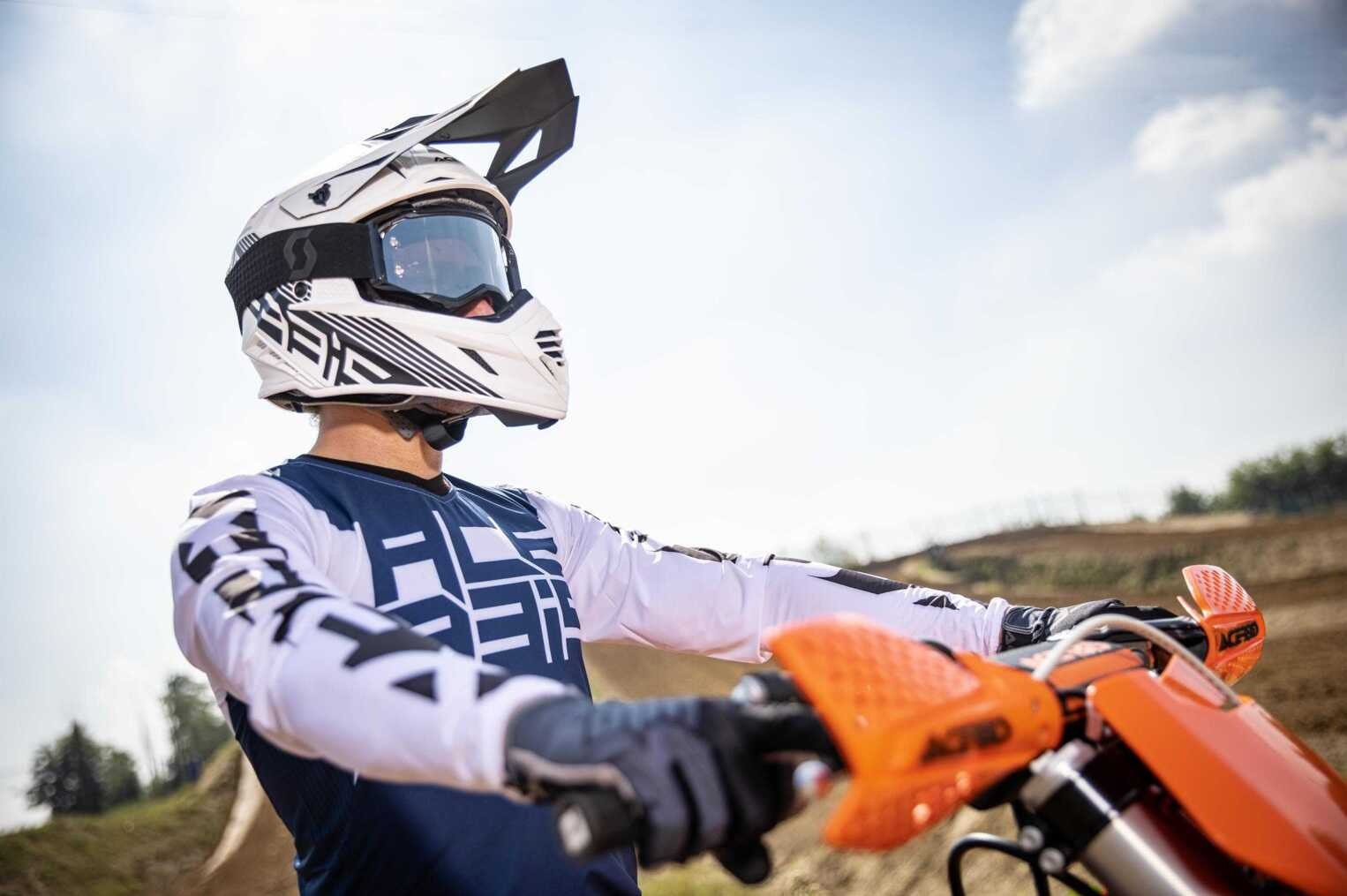
7. Insufficient ventilation in closed models
In motocross, the rider is physically strained much more than on the road. Poor ventilation leads to overheating, fatigue and fogging of the goggles. A quality motocross helmet should have a sophisticated system of channels that remove hot air even at lower speeds.
Benefits of superior ventilation:
- Reduced risk of heat exhaustion.
- Better sweat removal from the padding, which extends the life of the helmet interior.
- Clearer vision due to less fogging of the glasses.
8. Incorrect fit of the helmet on the forehead
This error is often the result of an inappropriate shell shape for a particular head type. The helmet should end about two fingers above the eyebrows. If it is moved too far back, it exposes the forehead and can slip into the eyes during a sharp impact or braking. Each manufacturer uses a slightly different shape of the inner mold, so we recommend trying several models until the helmet fits perfectly.
Checkpoints for proper fit:
- The lower edge of the goggle hole is horizontal to the eyebrows.
- When looking in the mirror, the upper part of the forehead is not visible.
- When leaning forward sharply, the helmet remains in place.
Choosing a new head protection should start with knowing the rules for determining the correct size and end with a thorough examination of all the safety features of the shell. Remember that colors look great, but in difficult terrain only technical parameters and how the helmet actually fits you will protect you. Take the time to choose the right helmet for your health.
If you want to know more about how to properly care for your helmet, read our article.
Our Store
A wide range of products and excellent service.
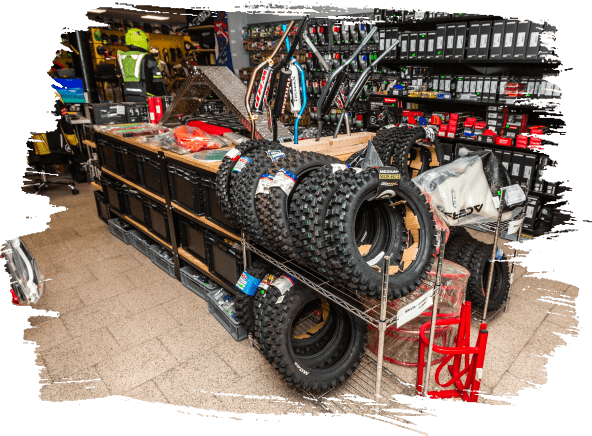
Not far from Strakonice, in the small village of Jinín next to the world-famous motocross track, you will find our MEFO store. Here, you will always be greeted by friendly salespeople who will be at your disposal throughout your entire shopping experience.