 WEAR SALE
 HELMETS SALE
 TRavel
 gloves
  GOGGLES & GLASSES
 Protectors %
 Boots %
 Jackets %
 Pants %
 PLASTICS SALE
  feders
 tables and masks
 spoilers
  frame cover
  Swingarm covers
 Raptor
 engine cover covers
 rear fenders
 radiator covers
 chain guides
 seat covers
 fork protectors
 engine covers
 handles
  lever protectors
 LEVERS SALE
 FILTERS FOR MOTO sale
 wheels and repair kits
 gas handles
 silencer parts
 chassis parts
 TOOLS SALE
 Brake pads
  cables on motorbike sale
 gears
gears bags and backpacks
 tyres and tubes
  screws


 airbox and airbox covers
 UNIVERSAL FENDER
 TANK COVER
 Front disc covers
 MUD FLAP
 HEADLIGHT MASK
 TAIL LIGHT FENDER
 BRAKES
 BRAKE DISCS & BOLTS
 CALIPERS & BRAKE PUMPS
 BRAKE PEDAL
 BRAKE HOSE
 ENGINE PARTS
 GASKETS & SEALS
 CARBURETOR
 BEARINGS
 OIL PLUG
 PISTON SETS
 TIMING CHAINS
 CLUTCH & ACCESSORIES
 Nozzles
 CYLINDER HEAD
 engine covers
 WATER PUMP
 CONNECTING ROD KIT
 AIR FILTER COVER
 OIL FILTER
 NET AIR FILTER
 AIR FILTER
 FUEL FILTER
 HANDGUARDS
  OPEN
OPEN CLOSED
 CLOSED UNIVERSAL
 HANDGUARD ACCESSORIES
 RADIATOR
 RADIATORS
 RADIATOR BRACES
 RADIATOR HOSES
 BEARINGS
 SPOKES
 SPACERS
 NUTS
NUTS WHEELS & RIMS
 TPS SENSOR COVER
 SWINGARM & LINKAGE
 LINKAGE KIT
 KETTENBLOCK
 LINKAGE COVERS
 TANKS
TANKS ADDITIONAL TANKS
 TANK CAPS
 TANK VALVES
 TANK PARTS
 GRIP ACCESSORIES
 CHAIN SET
 FRONT SPROCKETS
 SPROCKETS & SCREWS
 CHAINROLLER
 SPROCKET COVERS
  Accessories for chain wheels
 STEERING
 HANDLEBARS
 CLAMPS
 STEERING NECK
 CROSSBAR PAD
 HANDLEBAR ACCESORIES
 SEATS
SEATS SEATFOAM
 SEAT COVER
 FOOTPEGS
 FOOTPEGS
 SPRINGS & PINS
 PROTECTORS
 HEADLIGHTS
 SPARK PLUG
  SEAT
SEAT ENGINE BOLTS
 BRAKE BOLT AND SPROCKET SCREW
 SIMERINGS & DUSTERS
 SET OF BUSHINGS
 bleeder screw
 front shock absorber covers
 rear shock absorber covers
 REAR SHOCK ATTACHMENT
 LAUNCH HELPER
 EXHAUST
 EXHAUST PROTECTION
 COTTON WOOL
 PLUGS
PLUGS HEAT-RESISTANT FOIL
 CONNECTING RUUBBER
 SPRINGS
 REPAIR KITS
 SILENTBLOCK
 Adventure
 rider equipment
 Acerbis carbon
 Acerbis Airstrike-X
 Acerbis T711
 Acerbis Linear
 Acerbis Whoops
 FLIP-UP
 OPEN
OPEN JUNIOR
 RETRO
RETRO ACCESSORIES
 GOGGLES
 GLASS, TEARS OFF...
 PROTECTION
 CHEST PROTECTORS
 NECK BRACES
 KIDNEY BELTS
 ELBOW PROTECTORS
 KNEE GUARDS
 BACKBONE
 JUNIOR
 SOFT PANTS
 travel
 ANKLE
ANKLE ENDURO
 JUNIOR
 soles and more
 Wellies
 on a scooter
 JUNIOR
 ENDURO
 women
women ENDURO
 TEXTILIE
  jeans
jeans summer
 WINTER
 ENDURO
 summer
 WATERPROOF
 women's
  glove liners
 SOCKS
SOCKS WATERPOOF GEAR
 VESTS
VESTS THERMO UNDERWEAR
 THERMO T-SHIRTS
 THERMO PANTS
 THERMO KNEE SOCKS
 leisurewear
 Headwear
 T-SHIRTS
 trika-uni
 Children's T-shirts
 Mini T-shirts
 SWEATSHIRT
 leisure jackets
 FREE TIME SHORTS
 Sweatpants
 Casual shoes
 HOODS
HOODS SCARF
SCARF TOOLS
TOOLS TIRE LEVERS
  CHAIN BREAKERS
 Preparations for shocks
 Preparations for wheels
 Engine preparations
 Preparations for bearings
 OTHER MOTO TOOLS
 GRAPHICKITS, NUMBERS
 Wheel changers
 Canisters, measuring cups
 TRANSPORT
 CARPETS
 MOTORCYCLE COVERS
 HOURMETER
 helpers for track and training
 STAND
STAND HYDRATION BAGS
 PIT BOARD, MARKER
 BACKPACKS
 WAIST PACKS
 VOUCHERS
 STAND
STAND FORK OIL
 AIR FILTER OIL
 CHAIN LUBES
 COOLANT FLUID
 BRAKE FLUID
 CLEANER AND IMPREGNATION
 additives
 MEFO MOUSSE
 10"
10" 12"
12" 14"
14" 16"
16" 17"
17" 18"
18" 19"
19" 20"
20" 21"
21" MOUSSE GEL
 TUBE FOR MOTORCYCLE
 4"
4" 5"
5" 6"
6" 8"
8" 9"
9" 10"
10" 12"
12" 13"
13" 14"
14" 15"
15" 16"
16" 17"
17" 18"
18" 19"
19" 21"
21" 22"
22" 23"
23" 10"
10" 12"
12" 14"
14" 15"
15" 16"
16" 17"
17" 18"
18" 19"
19" 20"
20" 21"
21" ENDURO TIRE
 ROAD TIRE
 15"
15" 23"
23" 4"-6,5"
 8"
8" 13"
13" HALTERS
Protective vest: a piece of equipment you can't ride without - 4 tips for choosing the right one
Protective vest: a piece of equipment you can't ride without - 4 tips for choosingJana Wolfschlägerová
Share the article


6.05.2026
Anyone who has ever attempted the impossible in the dust of the track knows this. All it takes is for your front wheel to dance in a deep rut more than is healthy, or for you to be kicked by the rebound of a jump, and suddenly you are only holding on to the air instead of the handlebars. That second in which you fly to the ground can decide the rest of your season. And this is exactly the moment when a motocross protective vest is what stands between you and a stay in the hospital.
In the following lines, we will discuss together why a protective vest is an absolute must, how modern materials work and why it is not worth saving on certification. We will also look at the specific differences between the models so that you know whether classic plastic or modern soft foam is better for you.
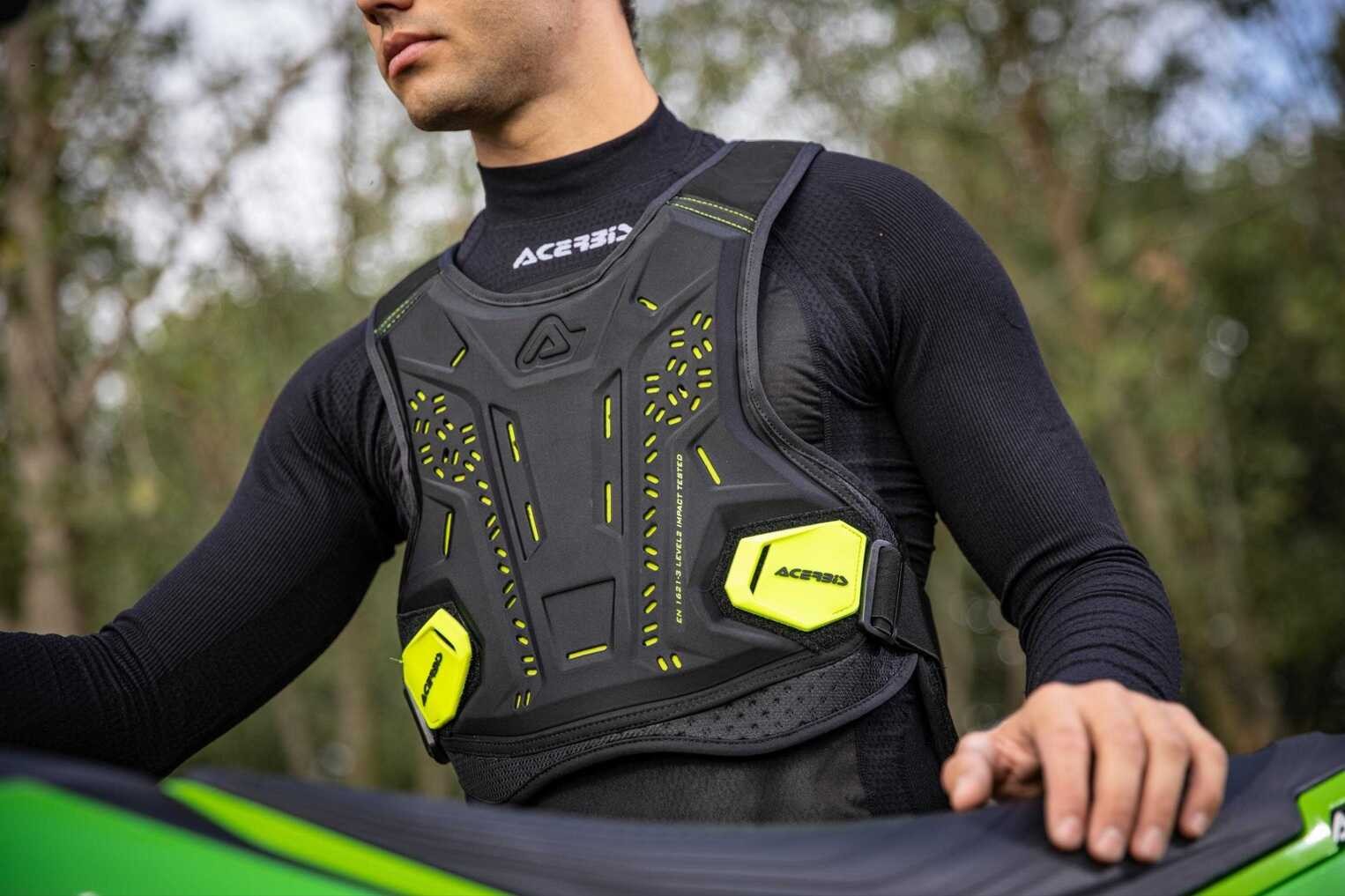
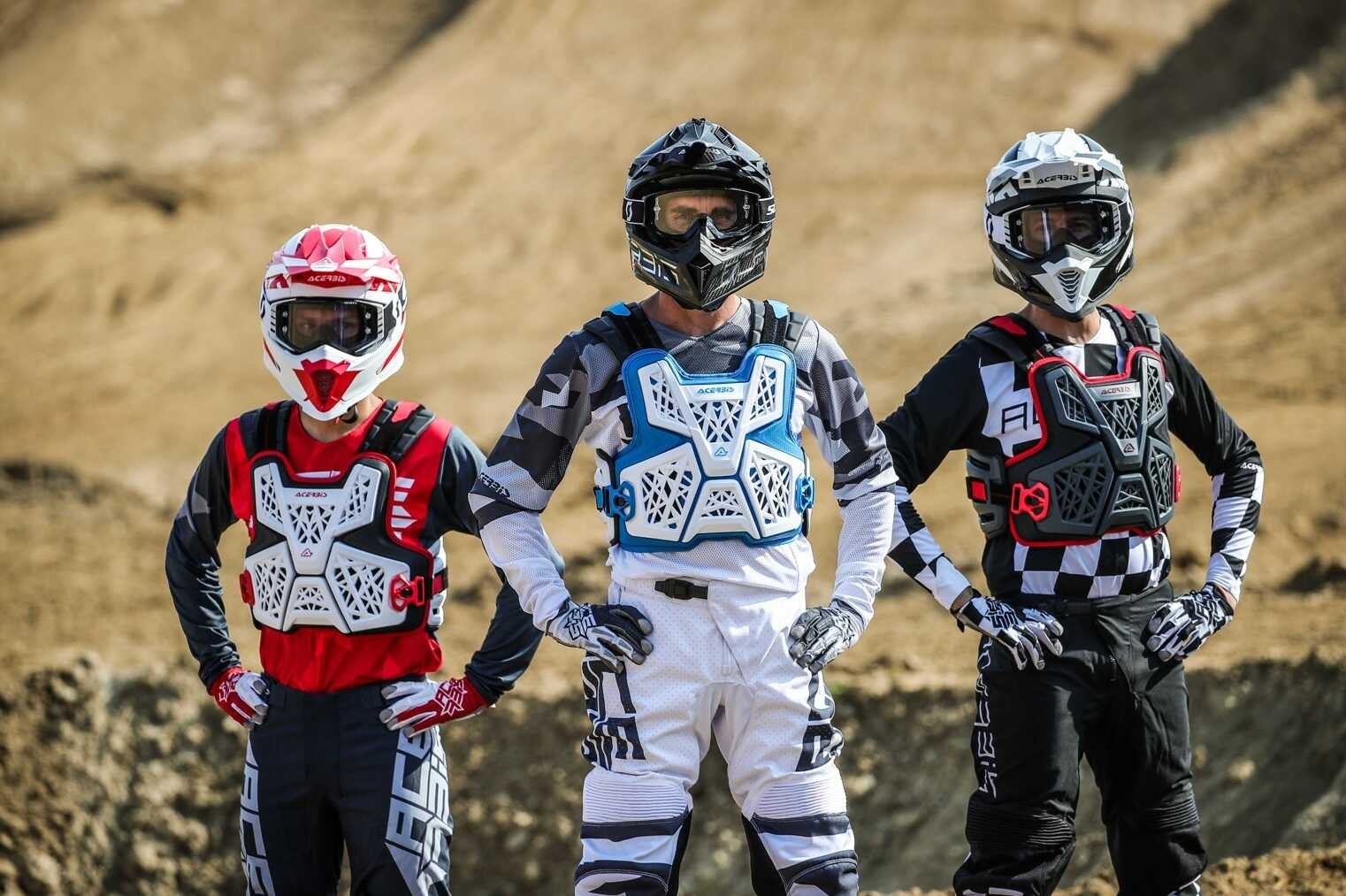
Source: https://marketing.acerbis.it/gallery/10052-offroad/10203-protections/204-body-armour-dna-level-2
A protective vest as a shield that will take the blows for you
A lot of people think that their body can handle it just fine. But physics is inexorable. We don't wear modern motorcycle protectors just for decoration. They have an important task, which is to break the kinetic energy of an impact before it looks under our skin to our organs. The statistics speak clearly: riders with certified torso protection have a 23% to 30% lower risk of ending up in bed with a serious injury. The key to safety is in energy dissipation. A quality vest not only spreads the impact over a larger area, but also slows it down, so the body doesn't get hit so hard and immediately.
Hard-shell vs. smart foam: What to choose?
The days when you looked like Robocop in a shell and couldn't even breathe properly are thankfully gone. Today's motocross protectors can be divided into two main groups:
- Hard-shell: Classic plastics made of durable polymers. This will be the right choice for you if you are mainly afraid of being punctured by a footrest or flying stones.
- Soft materials (D3O): In this case, it is an almost magical substance that is soft like modeling clay when at rest, but hardens in a millisecond upon impact. The protectors are lighter, have excellent ventilation and can even be worn directly under the jersey.
If you are hesitant, try the hybrid route. Top Acerbis protectors often combine both - a solid shield in the front against stones and smart foam on the back that adapts to your every movement in the attack position.
Spine protector and vest are a sure bet
The spine is the most sensitive part of the body and injuries to it can have fatal consequences. Therefore, a spine protector in a vest should be a standard that no train can pass through. A modern spine protector is designed to protect not only from a direct blow, but also from a dangerous range of motion (hyperflexion). When choosing, always look at the homologation and follow the EN 1621-2 certification. This European standard EN 1621-2 distinguishes between two levels:
- Level 1: Basic protection, which must keep the transmitted force below 18 kN.
- Level 2: Higher level of protection, where the limit value is only 9 kN. Level 2 therefore absorbs the impact approximately twice as effectively.
Tips for choosing a vest that fits properly
To make sure your vest and other motocross protectors really cover your back, it's a good idea to follow these rules:
- Don't just try them on in front of a mirror: This is the biggest mistake. The vest must behave naturally when you're moving. Always sit on the bike (or squat down), put your hands on the handlebars and lean your head back. The vest with the spine protector must not hit your helmet or choke you under the neck.
- Correct connection with the neck protector: If you wear a neck protector, it must fit the vest exactly. With modern Acerbis protectors, this is easy because they have removable parts, so the neck protector sits directly on the body, not on the plastic of the vest. This is really essential for the force to be distributed correctly in an impact.
- Don't forget the kidney belt: The kidney belt is a protector that is often overlooked, but it's a mistake. It will fix your internal organs against shocks and support your hips. Some of our motorcycle protectors have it already integrated, which will save you time when putting it on.
- Choose according to the charts, not the size of your T-shirt: Each brand may have different size charts. It is better to measure yourself twice, across the chest and the length of the spine. A vest that is too big will twist in a fall, a small one will not allow you to breathe after two laps.
Which vest is right for you?
Everyone has a different style, so there is no universal advice. But here is a trick to choose depending on where you spend most of your time:
- For seasoned racers: If you are chasing seconds in MXGP style, you need uncompromising racing protection. The P035 Race model is the absolute top. It is light as a feather, perfectly ventilated and has the strictest Level 2 certification on the chest and back.
- For enduro shooters and hobbyists: If you love technical passages and sometimes come into contact with branches in the forest, reach for the comprehensive body protection Koert-One. It is basically a jacket that also protects your shoulders and elbows in one piece. The Acerbis Flux Air with a side zipper is also a great alternative for technical enduro.
- For stealth style enthusiasts: Do you want to be safe, but don't want to look like a hockey player? In that case, the X-Fit Future series is just for you. It is an elastic shirt with inserted moto protectors that you will hardly see under the jersey. It meets the same standards as the hardest plastics.
How to properly maintain a protective vest
We would all like our motorcycle protectors to last us a long time, even years. But that requires a little care. Even the best motorcycle protectors start to smell over time, that's just a fact. But be careful how you wash them.
- Remove the inserts: If the design allows it, remove the protectors themselves before washing the textile part.
- D3O does not belong in the washing machine: Wipe foam materials only with a damp cloth. Aggressive chemicals or high temperatures in the dryer can change their structure and the vest will not harden as it should upon impact.
- Storage: Never leave your vest in a hot car in direct sunlight. UV rays accelerate the degradation of plastics, which can cause them to deteriorate faster than you might expect.
Conclusion
When you know you have everything you need for safety on the road, you ride differently. The fear of falling is replaced by absolute concentration on the track. A quality investment in honest protectors will always pay off in the form of peace of mind and, most importantly, health. Motocross is a tough sport, so be prepared for what comes.
Our Store
A wide range of products and excellent service.
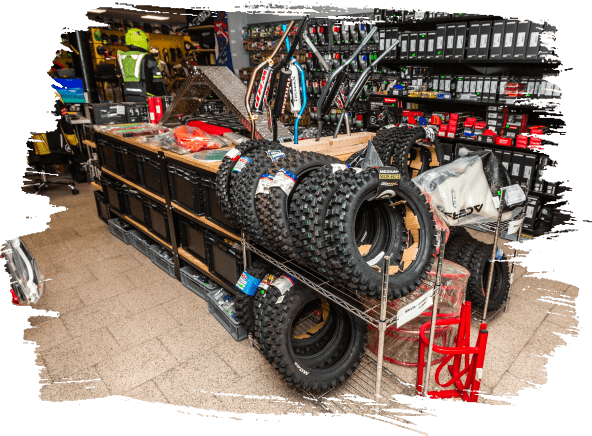
Not far from Strakonice, in the small village of Jinín next to the world-famous motocross track, you will find our MEFO store. Here, you will always be greeted by friendly salespeople who will be at your disposal throughout your entire shopping experience.