 WEAR SALE
 PLASTICS SALE
  cycling cheap


 airbox and airbox covers
 UNIVERSAL FENDER
 NUMBER PLATE
 LOVER FORK COVERS
 INGNITION & CLUTCH COVER
 SWINGARM PROTECTION
 TANK COVER
 Front disc covers
 MUD FLAP
 SKID PLATES
 FRAME PROTECTOR
 HEADLIGHT MASK
 Radiator grilles
 TAIL LIGHT FENDER
 SIDE PANELS
 FRONT FENDER
 RADIATOR SCOOPS
 Chain guide
 REAR FENDER
 BRAKES
 BRAKE DISCS & BOLTS
 BRAKE PADS
 CALIPERS & BRAKE PUMPS
 BRAKE PEDAL
 BRAKE HOSE
 ENGINE PARTS
 GASKETS & SEALS
 CARBURETOR
 BEARINGS
 OIL PLUG
 PISTON SETS
 TIMING CHAINS
 CLUTCH & ACCESSORIES
 Nozzles
 CYLINDER HEAD
 engine covers
 WATER PUMP
 CONNECTING ROD KIT
 FILTERS
 AIR FILTER COVER
 OIL FILTER
 NET AIR FILTER
 AIR FILTER
 FUEL FILTER
 HANDGUARDS
  OPEN
OPEN Open universal
 CLOSED
 CLOSED UNIVERSAL
 HANDGUARD ACCESSORIES
 RADIATOR
 RADIATORS
 RADIATOR BRACES
 RADIATOR HOSES
 WHEELS
 BEARINGS
 SPOKES
 SPACERS
 NUTS
NUTS WHEELS & RIMS
 TPS SENSOR COVER
 SWINGARM & LINKAGE
 LINKAGE KIT
 KETTENBLOCK
 LINKAGE COVERS
 CABLES
 TANKS
TANKS ADDITIONAL TANKS
 TANK CAPS
 TANK VALVES
 TANK PARTS
 LEVERS AND PERCH
 GRIPS
GRIPS THROTTLE TUBE
 GRIP ACCESSORIES
 SHIFT LEVERS
 CHAIN SET
 FRONT SPROCKETS
 SPROCKETS & SCREWS
 CHAINROLLER
 SPROCKET COVERS
  Accessories for chain wheels
 STEERING
 HANDLEBARS
 CLAMPS
 STEERING NECK
 CROSSBAR PAD
 HANDLEBAR ACCESORIES
 SEATS
SEATS SEATFOAM
 SEAT COVER
 FOOTPEGS
 FOOTPEGS
 SPRINGS & PINS
 PROTECTORS
 HEADLIGHTS
 SPARK PLUG
  BOLT SETS
 BRAKE BOLT AND SPROCKET SCREW
 PLASTIC SCREWS
 SEAT
SEAT SHOCK ABSORBERS
 SIMERINGS & DUSTERS
 SET OF BUSHINGS
 bleeder screw
 front shock absorber covers
 rear shock absorber covers
 REAR SHOCK ATTACHMENT
 LAUNCH HELPER
 EXHAUST
 EXHAUST PROTECTION
 COTTON WOOL
 PLUGS
PLUGS HEAT-RESISTANT FOIL
 CONNECTING RUUBBER
 SPRINGS
 REPAIR KITS
 SILENTBLOCK
 Adventure
 rider equipment
 MOTOCROSS/ENDURO
 Acerbis carbon
 Acerbis Airstrike-X
 Acerbis T711
 Acerbis Linear
 Acerbis Whoops
 FULL FACE
 FLIP-UP
 OPEN
OPEN JUNIOR
 RETRO
RETRO ACCESSORIES
 GOGGLES
 GLASS, TEARS OFF...
 PROTECTION
 CHEST PROTECTORS
 NECK BRACES
 KIDNEY BELTS
 ELBOW PROTECTORS
 KNEE GUARDS
 BACKBONE
 JUNIOR
 children’s chest protector
  SOFT PANTS
 BOOTS
BOOTS travel
 ANKLE
ANKLE ENDURO
 JUNIOR
 soles and more
 Wellies
 on a scooter
 JUNIOR
 JACKETS
 ENDURO
 women
women PANTS
PANTS ENDURO
 TEXTILIE
  jeans
jeans summer
 GLOVES
 WINTER
 ENDURO
 summer
 WATERPROOF
 women's
  glove liners
 SOCKS
SOCKS WATERPOOF GEAR
 VESTS
VESTS THERMO UNDERWEAR
 THERMO T-SHIRTS
 THERMO PANTS
 THERMO KNEE SOCKS
 leisurewear
 Headwear
 T-SHIRTS
 trika-uni
 Children's T-shirts
 Mini T-shirts
 SWEATSHIRT
 leisure jackets
 FREE TIME SHORTS
 Sweatpants
 Casual shoes
 HOODS
HOODS SCARF
SCARF TOOLS
TOOLS Wrenches, hooks, screwdrivers
 TIRE LEVERS
  CHAIN BREAKERS
 Preparations for shocks
 Preparations for wheels
 Engine preparations
 Preparations for bearings
 OTHER MOTO TOOLS
 GRAPHICKITS, NUMBERS
 Wheel changers
 Canisters, measuring cups
 TRANSPORT
 CARPETS
 MOTORCYCLE COVERS
 HOURMETER
 helpers for track and training
 STAND
STAND HYDRATION BAGS
 PIT BOARD, MARKER
 MOTO LUGGAGE
 BACKPACKS
 WAIST PACKS
 VOUCHERS
 STAND
STAND FORK OIL
 AIR FILTER OIL
 CHAIN LUBES
 COOLANT FLUID
 BRAKE FLUID
 CLEANER AND IMPREGNATION
 additives
 MEFO MOUSSE
 10"
10" 12"
12" 14"
14" 16"
16" 17"
17" 18"
18" 19"
19" 20"
20" 21"
21" MOUSSE GEL
 TUBE FOR MOTORCYCLE
 4"
4" 5"
5" 6"
6" 8"
8" 9"
9" 10"
10" 12"
12" 13"
13" 14"
14" 15"
15" 16"
16" 17"
17" 18"
18" 19"
19" 21"
21" 22"
22" 23"
23" MX TIRE
 10"
10" 12"
12" 14"
14" 15"
15" 16"
16" 17"
17" 18"
18" 19"
19" 20"
20" 21"
21" ENDURO TIRE
 ROAD TIRE
 15"
15" 23"
23" 4"-6,5"
 8"
8" 13"
13" HALTERS
 Massage products
 Pre-sports preparations
 Post-sports preparations
How to choose a motorcycle raincoat that will keep you dry even in the heaviest rain?
How to choose a motorcycle raincoat that will keep you dry even in the heaviest rain?


To work properly in the rain, waterproof motorcycle clothing must meet three basic requirements: it must use a high-quality membrane (such as Gore-Tex or Dermizax), have fully sealed seams, and be cut to fit closely to your body or over your jacket and trousers. An ordinary cheap motorcycle rain suit for 300 Kč will not keep you dry for more than 20 minutes in a real downpour.
Picture last September in Jinín. The sky opened with the kind of downpour you might see twice in a season. Water streamed over the helmet and straight down the collar, the trousers quickly soaked through at the thighs, and frozen hands slipped on the handlebars. The colleague riding alongside, however, wore a jacket with a laminated membrane and arrived at the shop completely dry. No magic. Just properly chosen waterproof motorcycle clothing.
Riding a motorcycle in the rain is not about heroics or how much discomfort you can endure. It is simply about whether you have motorcycle rainwear that actually does its job. Not gear whose seams give way after an hour of riding. Once you get soaked and cold, your concentration drops sharply, your reactions slow down, and riding becomes dangerous.
Membrane or just a water-repellent treatment?
That is the first question we ask at MEFO when you are looking for gear for bad weather. The answer directly determines how many hours you will stay dry in the rain.
- Water-repellent treatment (DWR – Durable Water Repellency): This is a chemical treatment applied to the surface of the fabric. Water droplets bead up and run off, but this protection works reliably only during the first season or the first few washes. The fabric then begins to let water through—first at the seams and later across the entire surface. You can tell because the jacket darkens and remains wet on the outside even though water has not yet penetrated all the way through.
- Membrane (Gore-Tex, Dermizax, eVent etc.): It is a thin layer laminated inside the fabric. It contains millions of microscopic pores that are smaller than a water droplet but larger than a water-vapour molecule. The result? Water cannot get in, but perspiration can escape. That is physics, not marketing.
High-quality waterproof motorcycle jacket with a membrane can easily withstand 3 to 5 hours of continuous riding in the rain. An ordinary jacket with a DWR treatment but no membrane will protect you for no more than 30 to 60 minutes.
TIP: When buying a new motorcycle rain suit, ask the seller directly: “Does this garment have an integrated membrane, or does it rely only on an external DWR treatment?” If the seller cannot answer without searching through a catalogue for a long time, look elsewhere.
WHAT TYPES OF MOTORCYCLE RAINWEAR ARE AVAILABLE
When choosing an outer layer to carry in your luggage for sudden rain, you can select from two main designs and several important accessories. Each solution has clear practical advantages and disadvantages:
1. ONE-PIECE RAIN SUITS (OVERALLS)
They provide the highest possible resistance to water and weather conditions. Because the suit is made in one piece, there is no break at the waist where water could enter during a long ride. The disadvantage is that the one-piece suit is harder to put on —especially at the roadside after you have already got slightly wet. Its cut also makes it slightly less compact when packed.
2. TWO-PIECE RAIN SUITS (JACKET AND TROUSERS)
A much more practical option for everyday use. The waterproof jacket and waterproof trousers can be put on very quickly and packed separately in your luggage, so they take up less space. In extremely heavy, prolonged rain, however, wind-driven water can work its way under the lower edge of the jacket and reach the trousers. This makes it better suited to short and medium-distance rides.
3. BOOT AND GLOVE COVERS
Many motorcyclists forget about their extremities, but frozen fingers mean reduced feeling in the hands and slower reactions when braking or operating the clutch. Glove and boot covers provide complete emergency protection, helping you stay warm and maintain safe control of the motorcycle even in the heaviest downpour.
MOTORCYCLE RAIN SUITS: WHEN THEY MAKE SENSE AND WHEN THEY ARE A WASTE OF MONEY
A conventional motorcycle rain suit has a firm place in motorcycle gear, but you should expect it to do only what it was designed for. It works well as an emergency solution: carry it packed in a backpack or pannier, pull it over your regular clothing when a quick shower arrives, and ride the remaining 30 km home or to your hotel.
If you plan to ride long distances in the rain, however, a cheap rain suit costing only a few hundred crowns will not work. You will encounter these major problems:
- Ballooning at higher speeds: At speeds above 80 km/h, a cheap rain suit inflates like a balloon. The fabric flaps violently in the wind, increases fatigue and, in extreme cases, can affect your stability on the motorcycle.
- Water leaking through the seams: Cheap rain suits have seams that are merely stitched, not welded or taped. Water can pass through them within 15 minutes.
- Overheating: Cheap material does not breathe. Heat and sweat immediately build up under the rain suit, so you will soon be wet from the inside even if not a single drop of rain falls.
If you are looking for a rain suit to keep on the motorcycle for emergencies, choose a version with welded seams, adjustment straps to prevent flapping, and prominent reflective elements. A weight of around 300–500 g is a reasonable compromise for carrying it in a pannier. Lighter models or those with a suspiciously low price are unlikely to perform adequately on a motorcycle.
HOW TO CHOOSE WATERPROOF MOTORCYCLE CLOTHING: 4 KEY PARAMETERS
When a customer comes to MEFO looking for reliability and safety in the rain, we do not show them glossy catalogues. We go straight to the technical details.
It is important to clearly distinguish between two types of gear: all-season motorcycle clothing with an integrated membrane (which you wear all the time) and a separate outer rain suit (oversuit), which you carry in a pannier and put on over your regular clothing only when it starts raining heavily.
These are the four key points we always assess when judging quality:
1. MEMBRANE CONSTRUCTION: LAMINATE VS. FREE-HANGING LINER (APPLIES TO ALL-SEASON TEXTILE JACKETS AND TROUSERS, NOT OUTER RAIN SUITS)
IN PREMIUM CLOTHING, THE MEMBRANE IS PRESSED (LAMINATED) DIRECTLY TO THE OUTER FABRIC. THE ADVANTAGE? THE CLOTHING DOES NOT ABSORB WATER, BECOME HEAVY OR FEEL COLD IN THE RAIN. COLD IS ONE OF THE GREATEST ENEMIES OF CONCENTRATION. LESS EXPENSIVE OPTIONS USE A FREE-HANGING MEMBRANE (A SO-CALLED Z-LINER). IT KEEPS WATER AWAY FROM THE BODY, BUT THE OUTER FABRIC ABSORBS WATER LIKE A SPONGE. THE CLOTHING BECOMES HEAVY, YOU GET COLD, AND YOUR REACTIONS SLOW SIGNIFICANTLY. THEREFORE, IF YOU RIDE LONG DISTANCES AND DO NOT WANT TO RISK HYPOTHERMIA, INVESTING IN A LAMINATED MEMBRANE CLEARLY PAYS OFF FROM AN ACTIVE-SAFETY PERSPECTIVE.
2. TAPED AND WELDED SEAMS (APPLIES TO EVERYTHING—JACKETS, TROUSERS AND OUTER MOTORCYCLE RAIN SUITS)
A seam is the weakest point. Every needle puncture damages the material. Unless the seam is covered on the inside with special waterproof tape (look for the term fully taped) or heat-welded, wind pressure can force water through it within 15 minutes. The most critical areas where poor-quality motorcycle rainwear fails are the shoulders, crotch and seat. Always inspect the inside of the garment. Stitched seams that are not taped on the inside are a waste of money in rainwear.
3. PROTECTOR CERTIFICATION AND ROOM FOR RIDING GEAR (APPLIES TO EVERYTHING—JACKETS, TROUSERS AND OUTER MOTORCYCLE RAIN SUITS)
Conventional waterproof textile motorcycle jackets and trousers must contain certified CE joint protectors and comply with the EN 17092 protective clothing standard. Water may not put your life at risk, but asphalt can. Rain protection must never replace impact protection.
A separate outer rain suit for motorcycling does not contain spaces for protectors and logically does not meet a crash-protection standard —that is the purpose of the clothing underneath it. The cut is the key safety parameter. The rain suit must be cut so that your standard motorcycle gear with protectors fits comfortably underneath, without pressure points or restricting your movement when controlling the motorcycle.
4. ERGONOMICS AND PASSIVE SAFETY (ADJUSTERS AND ZIPS) (APPLIES TO OUTER RAINWEAR AND RAIN SUITS)
You can recognise good waterproof motorcycle clothing by its adjustment straps on the sleeves, waist and thighs. Without them, the garment balloons at higher speeds and flaps violently in the wind. This is extremely tiring and can affect your stability. Long zips on the trouser legs are the second essential feature. When rain starts, you simply cannot pull the trousers over bulky motocross or touring boots at the roadside without them. For visibility in rain and fog, always insist on prominent reflective elements.
TIP for parents and beginners: When choosing motorcycle rainwear for young or novice riders, remember that staying dry and warm is essential for maintaining concentration. Protection from water is valuable, but rigid protectors under the rain suit are irreplaceable if something goes wrong on the road. A safe purchase therefore means considering both at the same time.
COMPARISON OF RAIN PROTECTION TYPES
Type | Average price | Rain time | Breathability | Impact safety |
DWR jacket without a membrane | 1 500–3 500 Kč | 30–60 min | low | depends on the material |
Jacket with an inserted membrane | 4 000–8 000 Kč | 2–4 hrs | medium | depends on the material |
Jacket with a laminated membrane | 8 000–18 000 Kč | 5+ hrs | high | depends on the material |
Motorcycle rain suit (welded seams) | 800–2 500 Kč | 1–3 hrs | none | none |
Rain suit (stitched seams) | 200–600 Kč | 15–30 min | none | none |
MEFO recommendations and advice
For rainwear, we recommend a two-piece rain suit when riding in a lightweight summer jacket designed for warm weather. If you encounter light rain, simply put on the waterproof jacket and you are protected. Our customers also use the waterproof jacket as an outer layer over a summer jacket in a light summer breeze, helping them stay warm.
If you are not sure which option best suits your riding style, visit us in person at the MEFO shop in Jinín near Strakonice —we are located right next to the motocross track and deal with these questions every day. You can examine the jackets, compare the materials and receive advice without sales pressure. Feel free to write to us or call before your visit—it will save time for both sides.
FREQUENTLY ASKED QUESTIONS
HOW DO I CHOOSE A MOTORCYCLE RAIN SUIT?
FIRST DECIDE WHETHER YOU WANT A ONE-PIECE SUIT WITH THE HIGHEST LEVEL OF SEALING OR A MORE PRACTICAL TWO-PIECE SET (JACKET + TROUSERS) THAT YOU CAN PUT ON MUCH FASTER AT THE ROADSIDE. REGARDLESS OF THE CUT, FOCUS ON FUNCTIONAL PARAMETERS RATHER THAN DESIGN: FULLY TAPED OR WELDED SEAMS, LONG ZIPS ON THE TROUSER LEGS (SO YOU CAN PULL THEM OVER BULKY BOOTS) AND PROMINENT REFLECTIVE ELEMENTS OR FLUORESCENT COLOURS, WHICH ARE ESSENTIAL FOR PASSIVE SAFETY IN THE RAIN.
WHAT SIZE MOTORCYCLE RAIN SUIT SHOULD I CHOOSE?
The basic rule is that an outer rain suit must always be tried on over your normal motorcycle clothing, including the protectors. Most manufacturers account for this and deliberately make rain suits slightly larger, so your standard size will often fit, but you should always simulate your riding position in the shop. The rain suit must not pull across the shoulders or restrict movement, but it must not flap either—excessively loose material can balloon at higher speeds, which causes extreme fatigue and directly threatens the rider’s stability on the motorcycle.
WHEN IS IT WORTH INVESTING IN A MORE EXPENSIVE MEMBRANE JACKET?
If you ride regularly—more than 10 days a year in rainy or unpredictable weather—an investment in a jacket with a laminated membrane can pay for itself by the second season. A cheaper option with only a DWR treatment must be replaced every 1 to 2 years as the water-repellent treatment degrades. In the end, the total cost of both options can be similar, or the DWR option may cost even more.
HOW SHOULD I CARE FOR A WATERPROOF JACKET SO IT LASTS?
Surface water-repellent treatment (DWR) is damaged by incorrect washing and storage. Wash a membrane jacket according to the care label—usually at 30 °C and never use fabric softener. After washing, briefly tumble-dry it at a low temperature, as heat reactivates the DWR treatment. Once a season, apply a DWR reproofing spray (for example Nikwax TX.Direct).
DOES MOTORCYCLE RAINWEAR WORK IN WINTER?
The membrane works at any temperature, but be careful—below 5 °C you need an insulating liner or a warm base layer. The membrane itself provides very little warmth. When choosing a jacket, therefore look for a 3-in-1 system or at least a removable thermal liner.
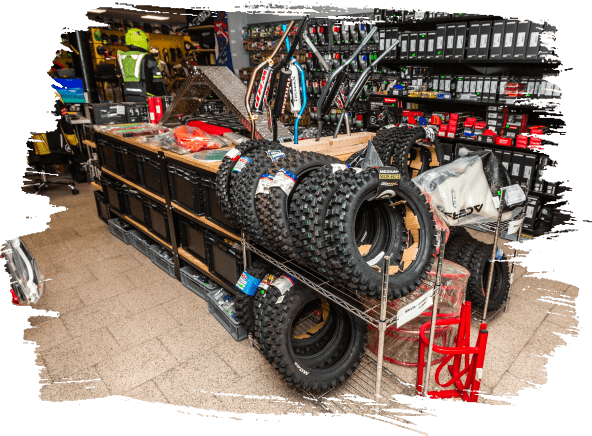
Our Store
Not far from Strakonice, in the small village of Jinín next to the world-famous motocross track, you will find our MEFO store. Here, you will always be greeted by friendly salespeople who will be at your disposal throughout your entire shopping experience.