 WEAR SALE
 HELMETS SALE
 TRavel
 gloves
  GOGGLES & GLASSES
 Protectors %
 Boots %
 Jackets %
 Pants %
 PLASTICS SALE
  feders
 tables and masks
 spoilers
  frame cover
  Swingarm covers
 Raptor
 engine cover covers
 rear fenders
 radiator covers
 chain guides
 seat covers
 fork protectors
 engine covers
 handles
  lever protectors
 LEVERS SALE
 FILTERS FOR MOTO sale
 wheels and repair kits
 gas handles
 silencer parts
 chassis parts
 TOOLS SALE
 Brake pads
  cables on motorbike sale
 gears
gears bags and backpacks
 tyres and tubes
  screws


 airbox and airbox covers
 UNIVERSAL FENDER
 TANK COVER
 Front disc covers
 MUD FLAP
 HEADLIGHT MASK
 TAIL LIGHT FENDER
 BRAKES
 BRAKE DISCS & BOLTS
 CALIPERS & BRAKE PUMPS
 BRAKE PEDAL
 BRAKE HOSE
 ENGINE PARTS
 GASKETS & SEALS
 CARBURETOR
 BEARINGS
 OIL PLUG
 PISTON SETS
 TIMING CHAINS
 CLUTCH & ACCESSORIES
 Nozzles
 CYLINDER HEAD
 engine covers
 WATER PUMP
 CONNECTING ROD KIT
 AIR FILTER COVER
 OIL FILTER
 NET AIR FILTER
 AIR FILTER
 FUEL FILTER
 HANDGUARDS
  OPEN
OPEN CLOSED
 CLOSED UNIVERSAL
 HANDGUARD ACCESSORIES
 RADIATOR
 RADIATORS
 RADIATOR BRACES
 RADIATOR HOSES
 BEARINGS
 SPOKES
 SPACERS
 NUTS
NUTS WHEELS & RIMS
 TPS SENSOR COVER
 SWINGARM & LINKAGE
 LINKAGE KIT
 KETTENBLOCK
 LINKAGE COVERS
 TANKS
TANKS ADDITIONAL TANKS
 TANK CAPS
 TANK VALVES
 TANK PARTS
 GRIP ACCESSORIES
 CHAIN SET
 FRONT SPROCKETS
 SPROCKETS & SCREWS
 CHAINROLLER
 SPROCKET COVERS
  Accessories for chain wheels
 STEERING
 HANDLEBARS
 CLAMPS
 STEERING NECK
 CROSSBAR PAD
 HANDLEBAR ACCESORIES
 SEATS
SEATS SEATFOAM
 SEAT COVER
 FOOTPEGS
 FOOTPEGS
 SPRINGS & PINS
 PROTECTORS
 HEADLIGHTS
 SPARK PLUG
  SEAT
SEAT ENGINE BOLTS
 BRAKE BOLT AND SPROCKET SCREW
 SIMERINGS & DUSTERS
 SET OF BUSHINGS
 bleeder screw
 front shock absorber covers
 rear shock absorber covers
 REAR SHOCK ATTACHMENT
 LAUNCH HELPER
 EXHAUST
 EXHAUST PROTECTION
 COTTON WOOL
 PLUGS
PLUGS HEAT-RESISTANT FOIL
 CONNECTING RUUBBER
 SPRINGS
 REPAIR KITS
 SILENTBLOCK
 Adventure
 rider equipment
 Acerbis carbon
 Acerbis Airstrike-X
 Acerbis T711
 Acerbis Linear
 Acerbis Whoops
 FLIP-UP
 OPEN
OPEN JUNIOR
 RETRO
RETRO ACCESSORIES
 GOGGLES
 GLASS, TEARS OFF...
 PROTECTION
 CHEST PROTECTORS
 NECK BRACES
 KIDNEY BELTS
 ELBOW PROTECTORS
 KNEE GUARDS
 BACKBONE
 JUNIOR
 SOFT PANTS
 travel
 ANKLE
ANKLE ENDURO
 JUNIOR
 soles and more
 Wellies
 on a scooter
 JUNIOR
 ENDURO
 women
women ENDURO
 TEXTILIE
  jeans
jeans summer
 WINTER
 ENDURO
 summer
 WATERPROOF
 women's
  glove liners
 SOCKS
SOCKS WATERPOOF GEAR
 VESTS
VESTS THERMO UNDERWEAR
 THERMO T-SHIRTS
 THERMO PANTS
 THERMO KNEE SOCKS
 leisurewear
 Headwear
 T-SHIRTS
 trika-uni
 Children's T-shirts
 Mini T-shirts
 SWEATSHIRT
 leisure jackets
 FREE TIME SHORTS
 Sweatpants
 Casual shoes
 HOODS
HOODS SCARF
SCARF TOOLS
TOOLS TIRE LEVERS
  CHAIN BREAKERS
 Preparations for shocks
 Preparations for wheels
 Engine preparations
 Preparations for bearings
 OTHER MOTO TOOLS
 GRAPHICKITS, NUMBERS
 Wheel changers
 Canisters, measuring cups
 TRANSPORT
 CARPETS
 MOTORCYCLE COVERS
 HOURMETER
 helpers for track and training
 STAND
STAND HYDRATION BAGS
 PIT BOARD, MARKER
 BACKPACKS
 WAIST PACKS
 VOUCHERS
 STAND
STAND FORK OIL
 AIR FILTER OIL
 CHAIN LUBES
 COOLANT FLUID
 BRAKE FLUID
 CLEANER AND IMPREGNATION
 additives
 MEFO MOUSSE
 10"
10" 12"
12" 14"
14" 16"
16" 17"
17" 18"
18" 19"
19" 20"
20" 21"
21" MOUSSE GEL
 TUBE FOR MOTORCYCLE
 4"
4" 5"
5" 6"
6" 8"
8" 9"
9" 10"
10" 12"
12" 13"
13" 14"
14" 15"
15" 16"
16" 17"
17" 18"
18" 19"
19" 21"
21" 22"
22" 23"
23" 10"
10" 12"
12" 14"
14" 15"
15" 16"
16" 17"
17" 18"
18" 19"
19" 20"
20" 21"
21" ENDURO TIRE
 ROAD TIRE
 15"
15" 23"
23" 4"-6,5"
 8"
8" 13"
13" HALTERS
How to choose motorcycle handlebars that improve your ergonomics and reduce fatigue?
How do you choose motorcycle handlebars that improve ergonomics and reduce fatigue?Vlasta Chalupný a Jiří Fulín
Share the article


6.05.2026
Have you ever ridden a few laps on the track or spent an hour in the woods and felt your hands start to go numb? Many riders have experienced that feeling—when your forearms burn, your fingers go numb, and you feel like you’re just holding onto the bike rather than controlling it. Many of them then blame it on a lack of physical fitness. However, poor ergonomics and improperly chosen handlebars are often to blame.
In this article, we’ll therefore look at how to adjust your riding position and handlebars so that the bike doesn’t tire you out, and what to watch out for with specific Austrian models.
.jpg)
Source: https://marketing.acerbis.it/gallery/10052-offroad/10199-mx-gear/172-mx-x-flex-two#galleryD-5
The Key to Choosing Handlebars: Height, Width, and Riding Style
The ideal motorcycle handlebars must match your body type and allow for a natural riding position, with your elbows slightly bent and your wrists in line with your forearms. While in motocross you’re looking for a more aggressive, lower grip for better feel in corners, in enduro and adventure riding you’ll appreciate a higher position that provides relief during long periods standing on the footpegs. With brands like KTM and Husqvarna, you also need to account for the fact that their front end is structurally higher (a combination of longer forks and different front-end geometry) than that of their Japanese competitors, which requires a slightly flatter handlebar profile.
TIP: If your current handlebars are significantly wider than 800 mm and you don’t feel comfortable in corners, try trimming a few millimeters off each side. You’ll see that the bike will start leaning into corners with much less resistance.
What parameters should you look for in the tables?
When looking at MX handlebar specifications, don’t get confused by the sea of numbers. Focus on these four:
- Width: The standard for adult motorcycles is around 800 mm.
- Height: Determines how high your hands will be relative to the handlebar mounts on the bike. Key for your stance on the footpegs.
- Rise: Indicates the total height of the handlebars from the center to the grip. The greater the rise, the more upright your stance.
- Sweep: Indicates how much the ends curve toward you. A small sweep (straighter bar) forces you to keep your elbows up, which is ideal for motocross.
Indicates the total height of the handlebars from the center to the grip. The higher the value, the more upright the riding position.
Handlebar clamps and tapered handlebars
Historically, 22mm (or 7/8-inch) handlebars were the standard for motorcycles. This design is characterized by having the same diameter along its entire length and requires reinforcement to maintain stiffness. The element providing this reinforcement is the handlebar crossbar, which, while it looks rugged and allows for the mounting of a navigation device or foam protector, is very stiff.
Modern MX handlebars in an oversized design (28.6 mm), however, lack a crossbar. Why? Because the tapered shape (thicker in the middle, thinner at the ends) allows the aluminum to flex slightly.
Advantages of tapered handlebars
- They better absorb micro-vibrations and dampen hard impacts during landings.
- Thanks to the absence of a crossbar, shocks are not transmitted as much to the palms, which significantly delays the onset of unpleasant arm pump (stiffening of the forearms).
- These handlebars are made from 7000 series aluminum alloy (often 7010 T6), which has high tensile strength (over 500 MPa), so they can withstand even brutal crashes.
Specifics for KTM and Husqvarna: Neken and ProTaper
If you ride an Austrian machine, you have to expect that the distance from the front wheel axle to the upper fork clamp is greater than on competing models. That’s why lower and flatter bends are often used with these brands.
- KTM: They come standard with Neken handlebars, which are extremely stiff. Great for pros, but hobby riders may quickly tire of them.
- Husqvarna: Here you’ll typically find ProTaper, which feels more comfortable and softer.
Although Neken may seem stiffer compared to ProTaper, it always depends on the specific model and bend, and this isn’t necessarily a rule.
Handlebar risers and stem
If you’re over 185 cm tall, you’re likely hunching over the bike in a standing position. The first solution is handlebar risers, which are essentially spacers under the clamps.
- Handlebar risers: They raise the grip by 15 to 30 mm. It’s a cheap and quick solution, but watch out for the length of the cables and hoses—when you turn the handlebars all the way, they shouldn’t be taut.
- Handlebar stems: These allow not only for raising the handlebars but also for moving them forward or backward. This is key to creating space in the cockpit so your knees don’t bang into the handlebars during aggressive riding.
Fun fact: Some pros (like Billy Bolt) prefer to use lowered footpegs instead of high handlebars because it doesn’t compromise the bike’s center of gravity.
Quick Installation Guide
1. Preparation and Documentation
Before you take anything apart, take a photo on your phone showing where the cables and brake hoses run. This will save you a lot of time when reassembling. Remember that whenever you raise or change the geometry, the cables must not be taut when the handlebars are turned to their maximum angle.
2. Cleanliness and Centering
- The surfaces in the clamps and the center of the handlebars must be perfectly clean and free of grease.
- Use the markings in the center of the tube for precise centering.
- Apply a light coat of anti-seize paste or lubricant to the screw threads and under the heads; this will ensure a more precise tightening torque.
3. Specific Tightening Procedure (Gap Rule)
For KTM and Husqvarna models, the procedure for tightening the clamps is critically important. In most cases, one side of the clamps is higher than the other.
- First, tighten the bolts on the side that makes “metal-to-metal” contact with the lower section (often the front bolts marked with an arrow).
- Tighten the rear bolts, where a gap remains visible, to 19–25 Nm using a torque wrench.
- Never try to completely close the gap at the rear, as you could irreversibly damage the handlebars.
4. Adjusting the controls and throttle
- Throttle: Leave a small gap (approx. 1–2 mm) between the end of the handlebars and the inner part of the throttle grip so that the throttle does not catch on the handlebars or the end of the tube.
- Levers: Adjust them so that they form a straight line with your forearm when you’re standing.
- Play: Do not tighten the brake and clutch lever clamps all the way. They should be able to be turned by hand. In the event of a fall, the lever on the handlebars will simply rotate instead of snapping.
5. Grips and Safety
If you are not using a lock-on system, clean the ends of the handlebars with rubbing alcohol. Regular hairspray works great as an adhesive—it holds once dry, but don’t forget to secure the grips with stainless steel wire in the grooves provided.
Investing in comfort pays off in every turn
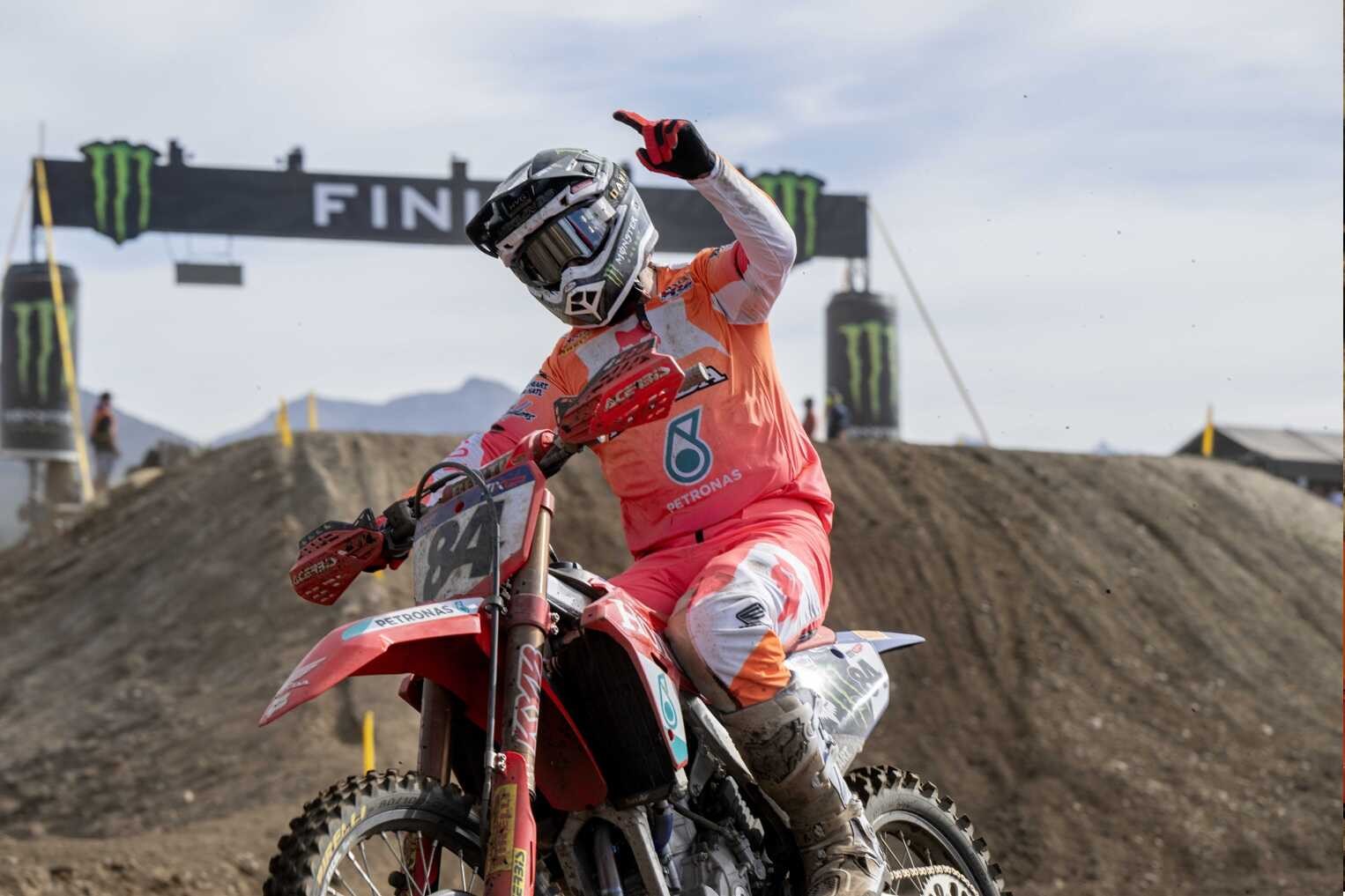
Choosing handlebars isn’t just about matching the color to your bike. It’s about how long you can stay fully focused while in the saddle or on the footpegs. The right stiffness and profile will save you a lot of energy, which you can then devote to your riding technique. Don’t forget that even the best handlebars need reliable handguards, because grips not only protect your fingers but also, in the event of a fall, the expensive levers on the handlebars.
Whether you’re tuning a race bike or an expedition enduro, use common sense and listen to your body.
Our Store
A wide range of products and excellent service.
Not far from Strakonice, in the small village of Jinín next to the world-famous motocross track, you will find our MEFO store. Here, you will always be greeted by friendly salespeople who will be at your disposal throughout your entire shopping experience.