 WEAR SALE
 HELMETS SALE
 TRavel
 gloves
  GOGGLES & GLASSES
 Protectors %
 Boots %
 Jackets %
 Pants %
 PLASTICS SALE
  feders
 tables and masks
 spoilers
  frame cover
  Swingarm covers
 Raptor
 engine cover covers
 rear fenders
 radiator covers
 chain guides
 seat covers
 fork protectors
 engine covers
 handles
  lever protectors
 LEVERS SALE
 FILTERS FOR MOTO sale
 wheels and repair kits
 gas handles
 silencer parts
 chassis parts
 TOOLS SALE
 Brake pads
  cables on motorbike sale
 gears
gears bags and backpacks
 tyres and tubes
  screws


 airbox and airbox covers
 UNIVERSAL FENDER
 TANK COVER
 Front disc covers
 MUD FLAP
 HEADLIGHT MASK
 TAIL LIGHT FENDER
 BRAKES
 BRAKE DISCS & BOLTS
 CALIPERS & BRAKE PUMPS
 BRAKE PEDAL
 BRAKE HOSE
 ENGINE PARTS
 GASKETS & SEALS
 CARBURETOR
 BEARINGS
 OIL PLUG
 PISTON SETS
 TIMING CHAINS
 CLUTCH & ACCESSORIES
 Nozzles
 CYLINDER HEAD
 engine covers
 WATER PUMP
 CONNECTING ROD KIT
 AIR FILTER COVER
 OIL FILTER
 NET AIR FILTER
 AIR FILTER
 FUEL FILTER
 HANDGUARDS
  OPEN
OPEN CLOSED
 CLOSED UNIVERSAL
 HANDGUARD ACCESSORIES
 RADIATOR
 RADIATORS
 RADIATOR BRACES
 RADIATOR HOSES
 BEARINGS
 SPOKES
 SPACERS
 NUTS
NUTS WHEELS & RIMS
 TPS SENSOR COVER
 SWINGARM & LINKAGE
 LINKAGE KIT
 KETTENBLOCK
 LINKAGE COVERS
 TANKS
TANKS ADDITIONAL TANKS
 TANK CAPS
 TANK VALVES
 TANK PARTS
 GRIP ACCESSORIES
 CHAIN SET
 FRONT SPROCKETS
 SPROCKETS & SCREWS
 CHAINROLLER
 SPROCKET COVERS
  Accessories for chain wheels
 STEERING
 HANDLEBARS
 CLAMPS
 STEERING NECK
 CROSSBAR PAD
 HANDLEBAR ACCESORIES
 SEATS
SEATS SEATFOAM
 SEAT COVER
 FOOTPEGS
 FOOTPEGS
 SPRINGS & PINS
 PROTECTORS
 HEADLIGHTS
 SPARK PLUG
  SEAT
SEAT ENGINE BOLTS
 BRAKE BOLT AND SPROCKET SCREW
 SIMERINGS & DUSTERS
 SET OF BUSHINGS
 bleeder screw
 front shock absorber covers
 rear shock absorber covers
 REAR SHOCK ATTACHMENT
 LAUNCH HELPER
 EXHAUST
 EXHAUST PROTECTION
 COTTON WOOL
 PLUGS
PLUGS HEAT-RESISTANT FOIL
 CONNECTING RUUBBER
 SPRINGS
 REPAIR KITS
 SILENTBLOCK
 Adventure
 rider equipment
 Acerbis carbon
 Acerbis Airstrike-X
 Acerbis T711
 Acerbis Linear
 Acerbis Whoops
 FLIP-UP
 OPEN
OPEN JUNIOR
 RETRO
RETRO ACCESSORIES
 GOGGLES
 GLASS, TEARS OFF...
 PROTECTION
 CHEST PROTECTORS
 NECK BRACES
 KIDNEY BELTS
 ELBOW PROTECTORS
 KNEE GUARDS
 BACKBONE
 JUNIOR
 SOFT PANTS
 travel
 ANKLE
ANKLE ENDURO
 JUNIOR
 soles and more
 Wellies
 on a scooter
 JUNIOR
 ENDURO
 women
women ENDURO
 TEXTILIE
  jeans
jeans summer
 WINTER
 ENDURO
 summer
 WATERPROOF
 women's
  glove liners
 SOCKS
SOCKS WATERPOOF GEAR
 VESTS
VESTS THERMO UNDERWEAR
 THERMO T-SHIRTS
 THERMO PANTS
 THERMO KNEE SOCKS
 leisurewear
 Headwear
 T-SHIRTS
 trika-uni
 Children's T-shirts
 Mini T-shirts
 SWEATSHIRT
 leisure jackets
 FREE TIME SHORTS
 Sweatpants
 Casual shoes
 HOODS
HOODS SCARF
SCARF TOOLS
TOOLS TIRE LEVERS
  CHAIN BREAKERS
 Preparations for shocks
 Preparations for wheels
 Engine preparations
 Preparations for bearings
 OTHER MOTO TOOLS
 GRAPHICKITS, NUMBERS
 Wheel changers
 Canisters, measuring cups
 TRANSPORT
 CARPETS
 MOTORCYCLE COVERS
 HOURMETER
 helpers for track and training
 STAND
STAND HYDRATION BAGS
 PIT BOARD, MARKER
 BACKPACKS
 WAIST PACKS
 VOUCHERS
 STAND
STAND FORK OIL
 AIR FILTER OIL
 CHAIN LUBES
 COOLANT FLUID
 BRAKE FLUID
 CLEANER AND IMPREGNATION
 additives
 MEFO MOUSSE
 10"
10" 12"
12" 14"
14" 16"
16" 17"
17" 18"
18" 19"
19" 20"
20" 21"
21" MOUSSE GEL
 TUBE FOR MOTORCYCLE
 4"
4" 5"
5" 6"
6" 8"
8" 9"
9" 10"
10" 12"
12" 13"
13" 14"
14" 15"
15" 16"
16" 17"
17" 18"
18" 19"
19" 21"
21" 22"
22" 23"
23" 10"
10" 12"
12" 14"
14" 15"
15" 16"
16" 17"
17" 18"
18" 19"
19" 20"
20" 21"
21" ENDURO TIRE
 ROAD TIRE
 15"
15" 23"
23" 4"-6,5"
 8"
8" 13"
13" HALTERS
Enduro vs. motocross: equipment differences riders should know
Enduro vs. motocross: equipment differences riders should know


Two bikes may look almost identical at first glance, but off-road they behave like night and day. For someone just getting into off-road riding, it can be confusing why one rider invests in a lightweight vest while another suits up in massive protectors. The differences between these disciplines are not just in the color of the plastics, but in the technology underneath them and in the demands placed on rider safety. So let’s look beneath the surface of the plastics and technical standards so you know exactly what your ride requires.
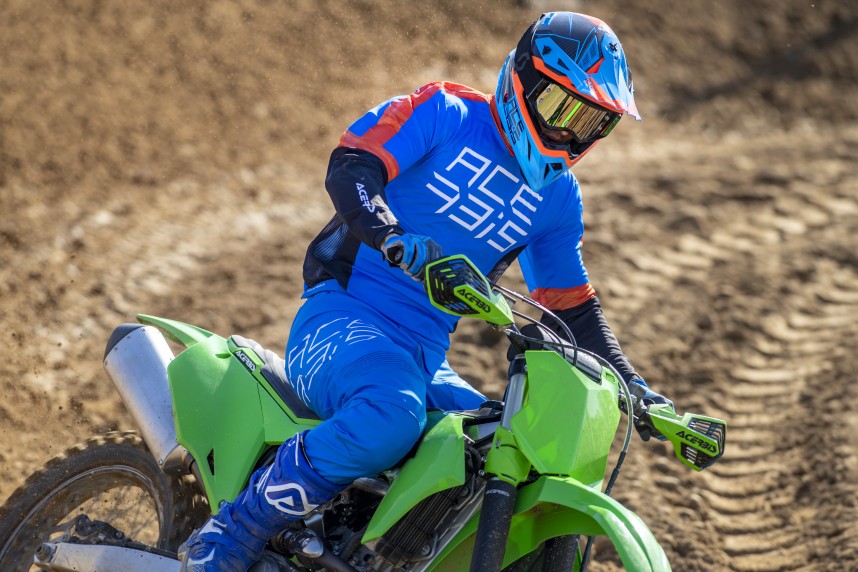
Source: https://marketing.acerbis.it/gallery/10052-offroad/10200-boots/17-x-team#galleryD-1
DIFFERENCE IN BIKES: AGGRESSION VS. ENDURANCE
The basic source of confusion is mixing up the machines themselves. Motocross bikes are designed for maximum performance in short bursts. They are lightweight machines stripped of everything unnecessary. They do not have lights, a stand, and older models often do not even have an electric starter. The engine is tuned for aggressive “explosiveness” that launches you out of a corner straight toward a triple jump.
By contrast, enduro bikes are built for hours in the saddle. They must have lights, a license plate, and road-use homologation because race routes often also run along public roads. Their engine has a smoother pull from low revs, which you will appreciate when you are trying to climb over a wet root or a slippery rock, where a motocross bike would just spin its wheel helplessly.
DIFFERENCE IN TIRES
If you think one knobby tire is the same as another, technical inspections at races will quickly prove you wrong. Motocross tires have tall, sharp knobs that bite deep into loosened soil. However, these tires are illegal on public roads.
For official enduro competitions, a special race-homologated tread pattern is used. According to FIM rules, the rear tire knob height must not exceed 13 mm. This is to protect nature so that motorcycles do not cause excessive erosion in forests. For recreational track riding, tires that can withstand hard landings and high speeds without tearing off knobs are more suitable.
Interesting fact: Have you noticed the size of the rear wheel? While motocross uses a 19-inch rim for stability in deep ruts, enduro relies on an 18-inch wheel. The taller tire sidewall on an enduro bike absorbs impacts against sharp edges better and allows you to ride with lower pressure, which dramatically increases traction in difficult terrain.
DIFFERENCE IN HELMETS AND THE 2026 SAFETY REVOLUTION
The biggest shift is happening in the area of head protection. From 2026, the new standard FIM FRHPhe-02 comes into force, and for the first time it also applies to off-road disciplines. Whereas helmets used to be tested mainly for direct impact, the new rules focus on so-called rotational acceleration. This is the force that, during a twisting fall, causes the most serious brain injuries.
Enduro helmets are often equipped with a visor (in the case of adventure enduro variants). Motocross helmets, by contrast, prioritize extreme ventilation because a rider in a 30-minute race expends so much energy that their head literally overheats. When buying, always look for head protection that meets the latest standards and will keep you protected in 2026.
DIFFERENCE IN BODY PROTECTION
When you look at motocross gear, you will see rigid, plastic chest protectors. Their main task is to protect the rider from a shower of stones and hard dirt thrown up by the bike in front. They are light and airy so they do not restrict movement during aggressive riding.
Comprehensive enduro gear goes further. Because in the forest there is a risk of impacts with trees or falls onto sharp rocks, riders often choose protective vests that also cover the shoulders and elbows. Another important element is under-jersey protectors, which use intelligent foams (e.g. D3O) – these are soft during normal movement but harden within milliseconds on impact.
SPECIFICS FOR ADVENTURE ENDURO AND E-MOBILITY
Adventure enduro is a chapter of its own. Here, jerseys give way to textile jackets with a membrane that can handle hundreds of kilometers in the rain. The 2026 trend is the integration of airbag vests directly into clothing, which takes road safety to a whole new level.
Another interesting newcomer is the enduro ebike. Although it is an electric bicycle, its weight of around 25 kg and downhill speed require equipment that is closer to motorcycles than to cycling. E-bikers today commonly use lightweight full-face helmets and knee protectors, which previously belonged exclusively to petrol engines.
| |
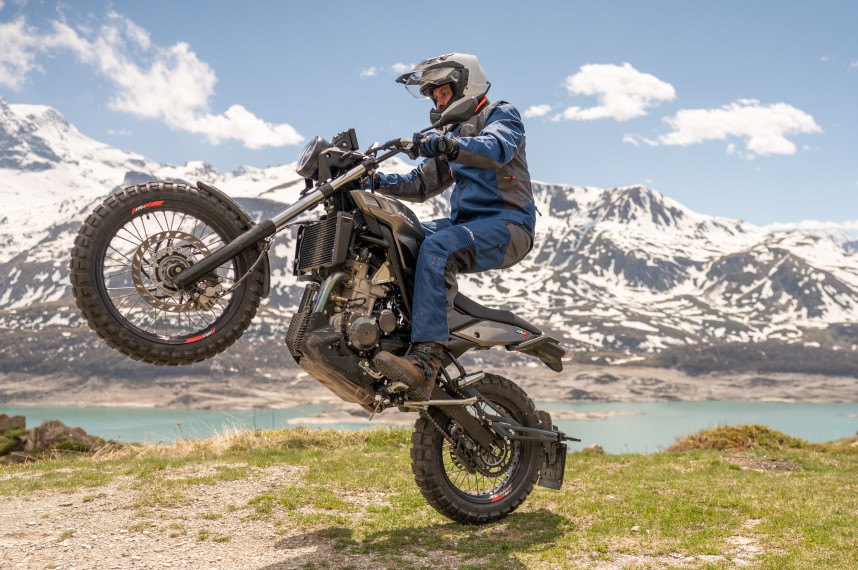
Source: https://marketing.acerbis.it/gallery/10089-enduro/10377-jackets/423-enduro-one-jacket#galleryD-2
SUMMARY OF THE DIFFERENCES
If you are attracted to adrenaline, jumps, and elbow-to-elbow battles, look for gear for motocross. If your priority is freedom in nature, overcoming technical obstacles, and long hours in the terrain, focus on enduro. Remember that motocross tracks require a different approach to safety than a wild forest, but in both cases, quality motocross gear is an investment in your health that pays off at the first unplanned contact with the ground.
TIP for every rider: If you want to solve puncture problems once and for all, replace classic inner tubes with inserts that never puncture. The so-called mousse simulates tire pressure, but because it is made of solid foam, you cannot puncture it on a rock. In enduro, it is now essentially standard.
Our Store
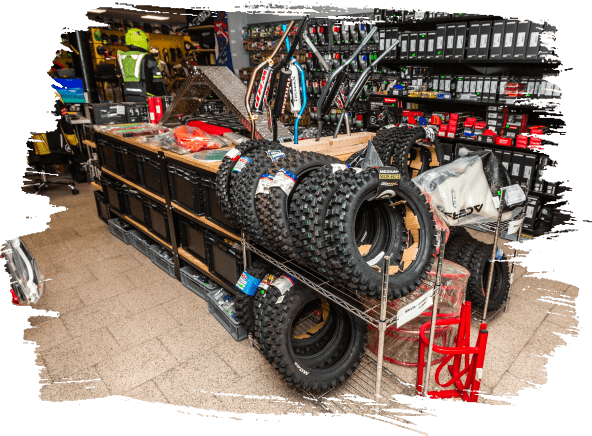
Not far from Strakonice, in the small village of Jinín next to the world-famous motocross track, you will find our MEFO store. Here, you will always be greeted by friendly salespeople who will be at your disposal throughout your entire shopping experience.