 WEAR SALE
 PLASTICS SALE
  cycling cheap


 airbox and airbox covers
 UNIVERSAL FENDER
 NUMBER PLATE
 LOVER FORK COVERS
 INGNITION & CLUTCH COVER
 SWINGARM PROTECTION
 TANK COVER
 Front disc covers
 MUD FLAP
 SKID PLATES
 FRAME PROTECTOR
 HEADLIGHT MASK
 Radiator grilles
 TAIL LIGHT FENDER
 SIDE PANELS
 FRONT FENDER
 RADIATOR SCOOPS
 Chain guide
 REAR FENDER
 BRAKES
 BRAKE DISCS & BOLTS
 BRAKE PADS
 CALIPERS & BRAKE PUMPS
 BRAKE PEDAL
 BRAKE HOSE
 ENGINE PARTS
 GASKETS & SEALS
 CARBURETOR
 BEARINGS
 OIL PLUG
 PISTON SETS
 TIMING CHAINS
 CLUTCH & ACCESSORIES
 Nozzles
 CYLINDER HEAD
 engine covers
 WATER PUMP
 CONNECTING ROD KIT
 FILTERS
 AIR FILTER COVER
 OIL FILTER
 NET AIR FILTER
 AIR FILTER
 FUEL FILTER
 HANDGUARDS
  OPEN
OPEN Open universal
 CLOSED
 CLOSED UNIVERSAL
 HANDGUARD ACCESSORIES
 RADIATOR
 RADIATORS
 RADIATOR BRACES
 RADIATOR HOSES
 WHEELS
 BEARINGS
 SPOKES
 SPACERS
 NUTS
NUTS WHEELS & RIMS
 TPS SENSOR COVER
 SWINGARM & LINKAGE
 LINKAGE KIT
 KETTENBLOCK
 LINKAGE COVERS
 CABLES
 TANKS
TANKS ADDITIONAL TANKS
 TANK CAPS
 TANK VALVES
 TANK PARTS
 LEVERS AND PERCH
 GRIPS
GRIPS THROTTLE TUBE
 GRIP ACCESSORIES
 SHIFT LEVERS
 CHAIN SET
 FRONT SPROCKETS
 SPROCKETS & SCREWS
 CHAINROLLER
 SPROCKET COVERS
  Accessories for chain wheels
 STEERING
 HANDLEBARS
 CLAMPS
 STEERING NECK
 CROSSBAR PAD
 HANDLEBAR ACCESORIES
 SEATS
SEATS SEATFOAM
 SEAT COVER
 FOOTPEGS
 FOOTPEGS
 SPRINGS & PINS
 PROTECTORS
 HEADLIGHTS
 SPARK PLUG
  BOLT SETS
 BRAKE BOLT AND SPROCKET SCREW
 PLASTIC SCREWS
 SEAT
SEAT SHOCK ABSORBERS
 SIMERINGS & DUSTERS
 SET OF BUSHINGS
 bleeder screw
 front shock absorber covers
 rear shock absorber covers
 REAR SHOCK ATTACHMENT
 LAUNCH HELPER
 EXHAUST
 EXHAUST PROTECTION
 COTTON WOOL
 PLUGS
PLUGS HEAT-RESISTANT FOIL
 CONNECTING RUUBBER
 SPRINGS
 REPAIR KITS
 SILENTBLOCK
 Adventure
 rider equipment
 MOTOCROSS/ENDURO
 Acerbis carbon
 Acerbis Airstrike-X
 Acerbis T711
 Acerbis Linear
 Acerbis Whoops
 FULL FACE
 FLIP-UP
 OPEN
OPEN JUNIOR
 RETRO
RETRO ACCESSORIES
 GOGGLES
 GLASS, TEARS OFF...
 PROTECTION
 CHEST PROTECTORS
 NECK BRACES
 KIDNEY BELTS
 ELBOW PROTECTORS
 KNEE GUARDS
 BACKBONE
 JUNIOR
 children’s chest protector
  SOFT PANTS
 BOOTS
BOOTS travel
 ANKLE
ANKLE ENDURO
 JUNIOR
 soles and more
 Wellies
 on a scooter
 JUNIOR
 JACKETS
 ENDURO
 women
women PANTS
PANTS ENDURO
 TEXTILIE
  jeans
jeans summer
 GLOVES
 WINTER
 ENDURO
 summer
 WATERPROOF
 women's
  glove liners
 SOCKS
SOCKS WATERPOOF GEAR
 VESTS
VESTS THERMO UNDERWEAR
 THERMO T-SHIRTS
 THERMO PANTS
 THERMO KNEE SOCKS
 leisurewear
 Headwear
 T-SHIRTS
 trika-uni
 Children's T-shirts
 Mini T-shirts
 SWEATSHIRT
 leisure jackets
 FREE TIME SHORTS
 Sweatpants
 Casual shoes
 HOODS
HOODS SCARF
SCARF TOOLS
TOOLS Wrenches, hooks, screwdrivers
 TIRE LEVERS
  CHAIN BREAKERS
 Preparations for shocks
 Preparations for wheels
 Engine preparations
 Preparations for bearings
 OTHER MOTO TOOLS
 GRAPHICKITS, NUMBERS
 Wheel changers
 Canisters, measuring cups
 TRANSPORT
 CARPETS
 MOTORCYCLE COVERS
 HOURMETER
 helpers for track and training
 STAND
STAND HYDRATION BAGS
 PIT BOARD, MARKER
 MOTO LUGGAGE
 BACKPACKS
 WAIST PACKS
 VOUCHERS
 STAND
STAND FORK OIL
 AIR FILTER OIL
 CHAIN LUBES
 COOLANT FLUID
 BRAKE FLUID
 CLEANER AND IMPREGNATION
 additives
 MEFO MOUSSE
 10"
10" 12"
12" 14"
14" 16"
16" 17"
17" 18"
18" 19"
19" 20"
20" 21"
21" MOUSSE GEL
 TUBE FOR MOTORCYCLE
 4"
4" 5"
5" 6"
6" 8"
8" 9"
9" 10"
10" 12"
12" 13"
13" 14"
14" 15"
15" 16"
16" 17"
17" 18"
18" 19"
19" 21"
21" 22"
22" 23"
23" MX TIRE
 10"
10" 12"
12" 14"
14" 15"
15" 16"
16" 17"
17" 18"
18" 19"
19" 20"
20" 21"
21" ENDURO TIRE
 ROAD TIRE
 15"
15" 23"
23" 4"-6,5"
 8"
8" 13"
13" HALTERS
 Massage products
 Pre-sports preparations
 Post-sports preparations
How to replace plastics on a motorcycle and give it a new look
How to replace plastics on a motorcycle and transform its appearance


WHAT IS WORTH REPLACING, WHAT TO REPAIR AND WHAT TO WATCH OUT FOR
With off-road riding, sooner or later the plastics are bound to take a beating. One fall in a rut, a tree in the woods or simply dropping the bike on a rocky climb is enough to leave a crack, a deep scratch or a broken mounting tab. And sometimes it is not just about appearance. Old plastics become brittle from sunlight over time, start cracking around the bolts and, after a few seasons, no longer stay in place as they should.
The good news is that replacing the plastics is not particularly difficult, and most riders can do it at home in the garage in a single afternoon.
WHEN DOES IT MAKE SENSE TO REPLACE THE PLASTICS?
Minor scratches or scuffs are normal in motocross and enduro. There is no need to deal with every mark left by riding.
New plastics make sense when:
- the plastic is cracking around the bolts,
- the parts no longer stay securely in place,
- the material is hard and brittle,
- or the bike simply looks tired after years of use.
This is especially common with:
- radiator shrouds,
- side panels,
- rear fenders,
- and front number plates.
OEM OR AFTERMARKET?
Almost everyone has to make this decision.
Original OEM plastics usually fit perfectly, but they are considerably more expensive. High-quality aftermarket parts work very well today, and with established brands the difference is usually minimal.
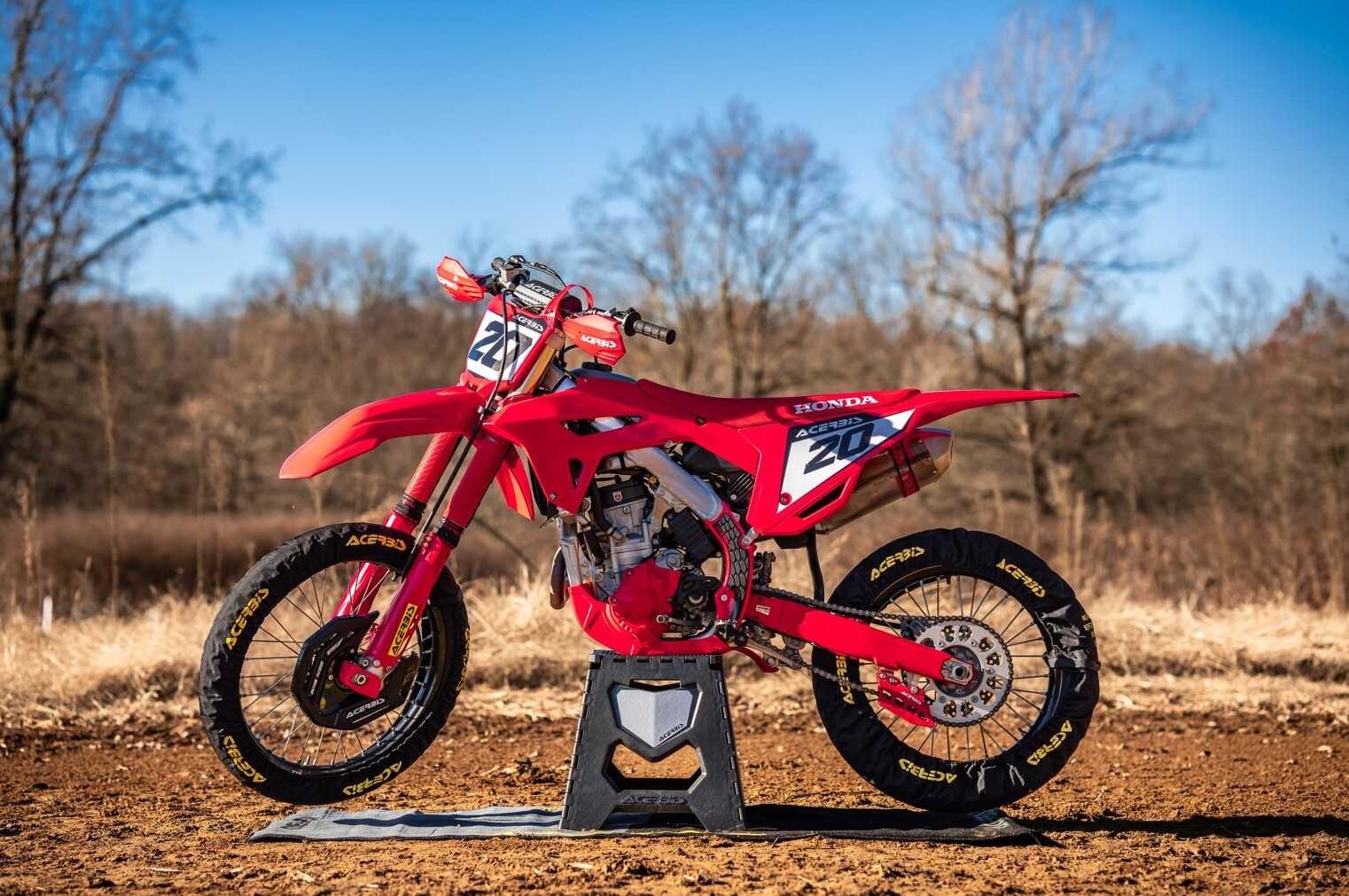
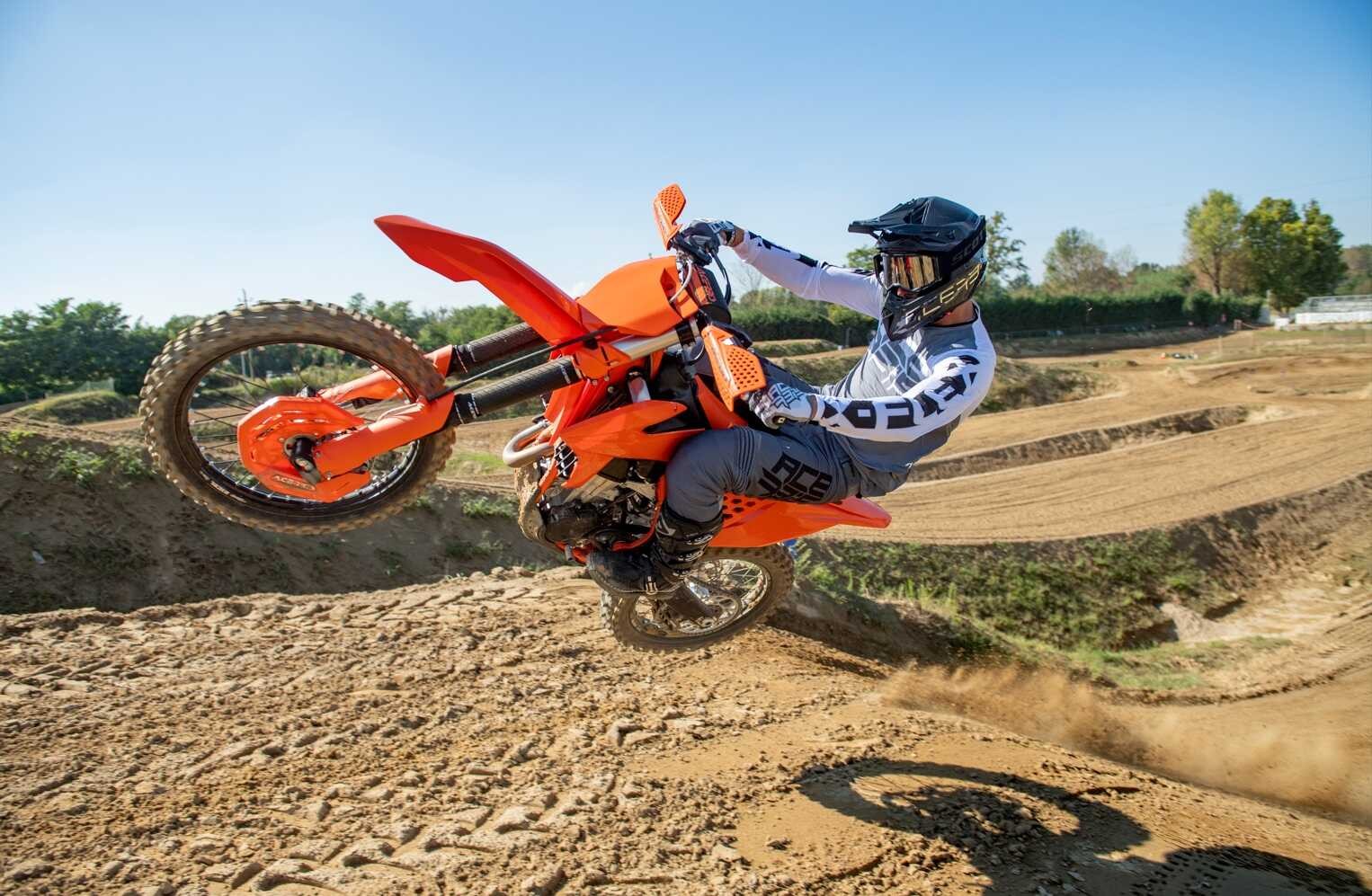
For example Acerbis has long been one of the most commonly used options:
- good fit,
- quality material,
- and colour that is not merely painted onto the surface.
WHY CHOOSE ACERBIS PLASTICS?
Acerbis has been one of the world's leading manufacturers of plastics for motocross and enduro motorcycles for decades. Most plastic parts are manufactured in Italy, where the company uses its own blend of plastic materials. It combines high strength with flexibility, helping the plastics withstand impacts and normal use in demanding terrain. The exception is Acerbis plastic fuel tanks, which are made at the company's production plant in the Czech Republic.
WORKSHOP TIP:
The cheapest kits most often have fitment problems around the airbox and radiators.
What should you prepare before replacement?
For a standard replacement, you usually only need:
- T-handle wrenches,
- a socket set,
- a few Allen keys,
- and a tray for the bolts.
It is best to place the bike on a stand so it is easy to work on.
It is also worth:
- taking a photo of the bike before disassembly,
- and keeping the bolts organised by individual part as you work. On some models, they are not all the same length.
Source: https://marketing.acerbis.it/gallery/10052-offroad/10199-mx-gear/172-mx-x-flex-two#galleryD-15
HOW TO PROCEED WITH DISASSEMBLY?
The simplest method is to work from the rear to the front.
1. Seat and side panels
Start with the seat and the side plastics around the airbox.
Do not force them. Many parts sit in rubber grommets and only need to be carefully pulled out.
2. Rear fender
Once the side panels have been removed, access to the rear fender is usually much easier.
If your bike has a light or indicators:
- remember to disconnect the wiring.
3. Radiator shrouds
These plastics are often subjected to the greatest stress and are also the most brittle.
Mounting tabs or holes most often crack around the radiators.
4. Front number plate and fender
Finish with the front of the bike.
When reassembling, proceed in reverse - from the front to the rear.
Watch the bolts
One of the most common mistakes is using ordinary bolts instead of the original ones.
Original bolts have special shoulders that spread the pressure across the plastic. If you use a standard bolt:
- the plastic will gradually deform,
- cracks will form,
- and the hole will gradually tear out.
MEFO RECOMMENDS:
If the original washers or rubber mounts are worn, it is worth replacing them at the same time as the plastics.
WHAT IF THE NUT INSERT IN THE FUEL TANK SPINS?
This is a common problem, especially on older bikes.
The brass insert in the fuel tank starts spinning and the bolt cannot be loosened.
Before you start forcing the plastic:
- try gently warming the bolt,
- use penetrating oil if necessary,
- and work carefully.
Brute force usually causes further damage.
If the insert has already come out:
- it can be bonded back in with epoxy,
- but the surrounding area must be thoroughly degreased.
New plastics = a huge difference in appearance
On an older bike, new plastics often make a bigger difference than expensive accessories.
The bike:
- looks cleaner,
- looks newer,
- and often makes you more excited to ride again.
During replacement, most riders also:
- replace the graphics,
- clean the frame,
- check the wiring,
- and deal with small jobs they normally cannot reach.
SUMMARY
Replacing the plastics is not a difficult job, but it pays to work calmly and systematically.
The most important points are:
- do not pry parts off by force,
- use the correct bolts,
- and do not underestimate the condition of old mounting tabs and rubber mounts.
If the plastics are already hard and cracked, a new kit usually makes more sense than complicated repairs.
Whether you are replacing only a fender after a fall or a complete kit, new plastics can give the bike an entirely different look and riding feel.
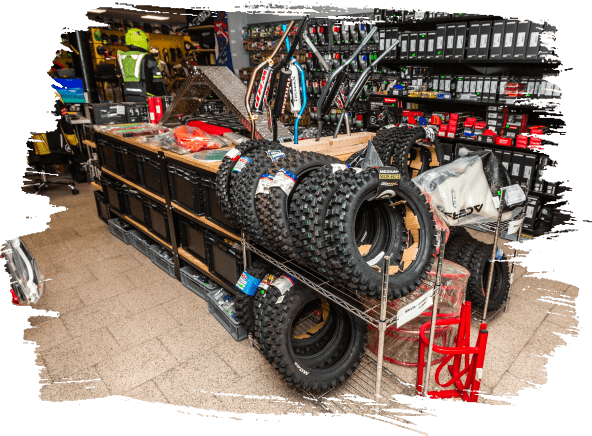
Our Store
Not far from Strakonice, in the small village of Jinín next to the world-famous motocross track, you will find our MEFO store. Here, you will always be greeted by friendly salespeople who will be at your disposal throughout your entire shopping experience.